Tunbridge Wells has a well-established local economy with strong demand for trades and professional services, but that demand does not automatically translate into enquiries for businesses whose websites are not built to capture it. Customers searching across the TN1 and TN2 postcodes regularly compare several businesses before making contact, and the sites that get chosen are almost always the ones that communicate clearly, load quickly, and make it obvious what the business does and where it operates. A good reputation earns you consideration. A well-structured website is what converts that consideration into a call.

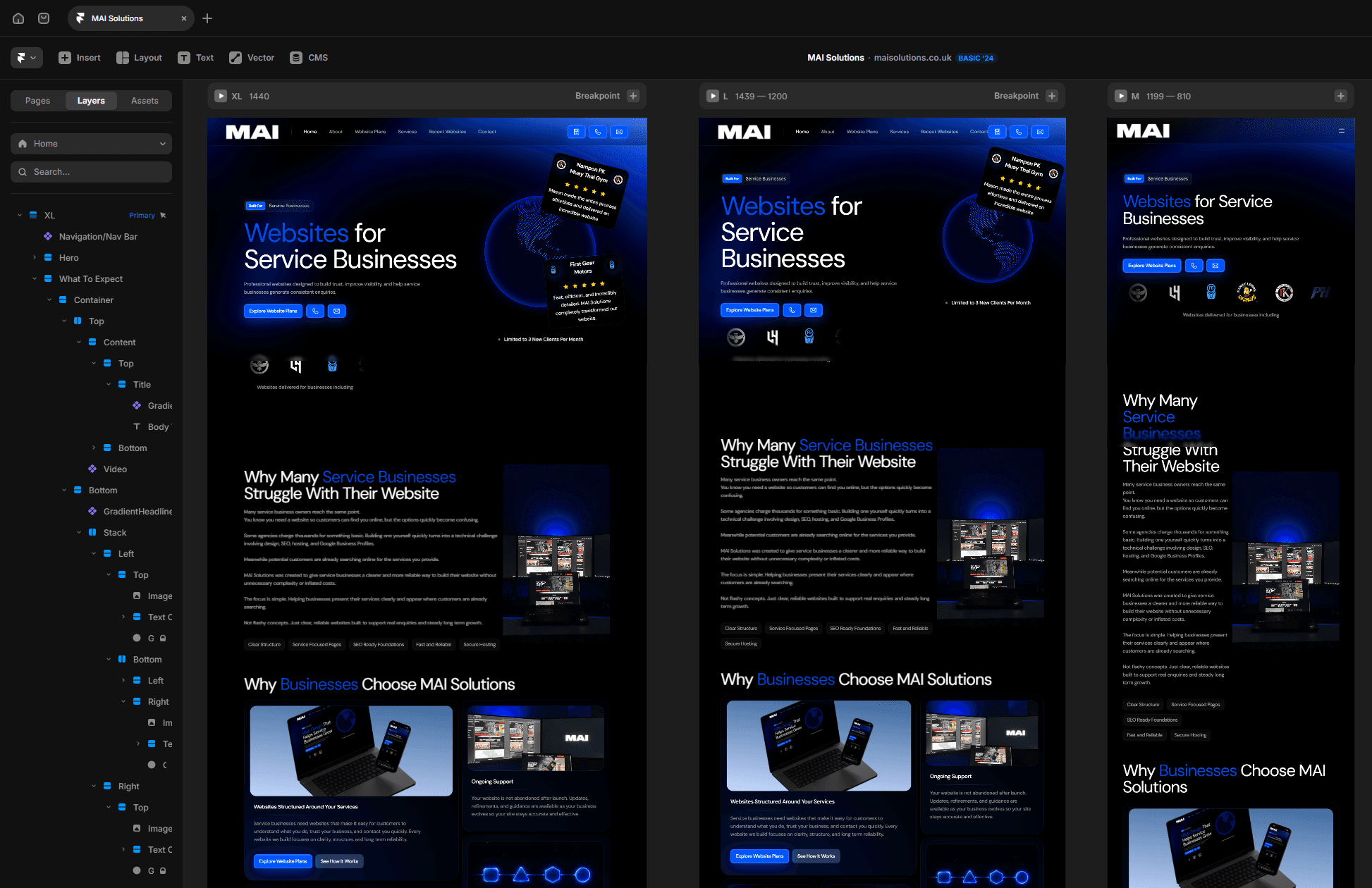
Web Design
A site built around how your customers search and decide, not just how it looks. Every page is structured to generate enquiries, with SEO foundations included from the start.
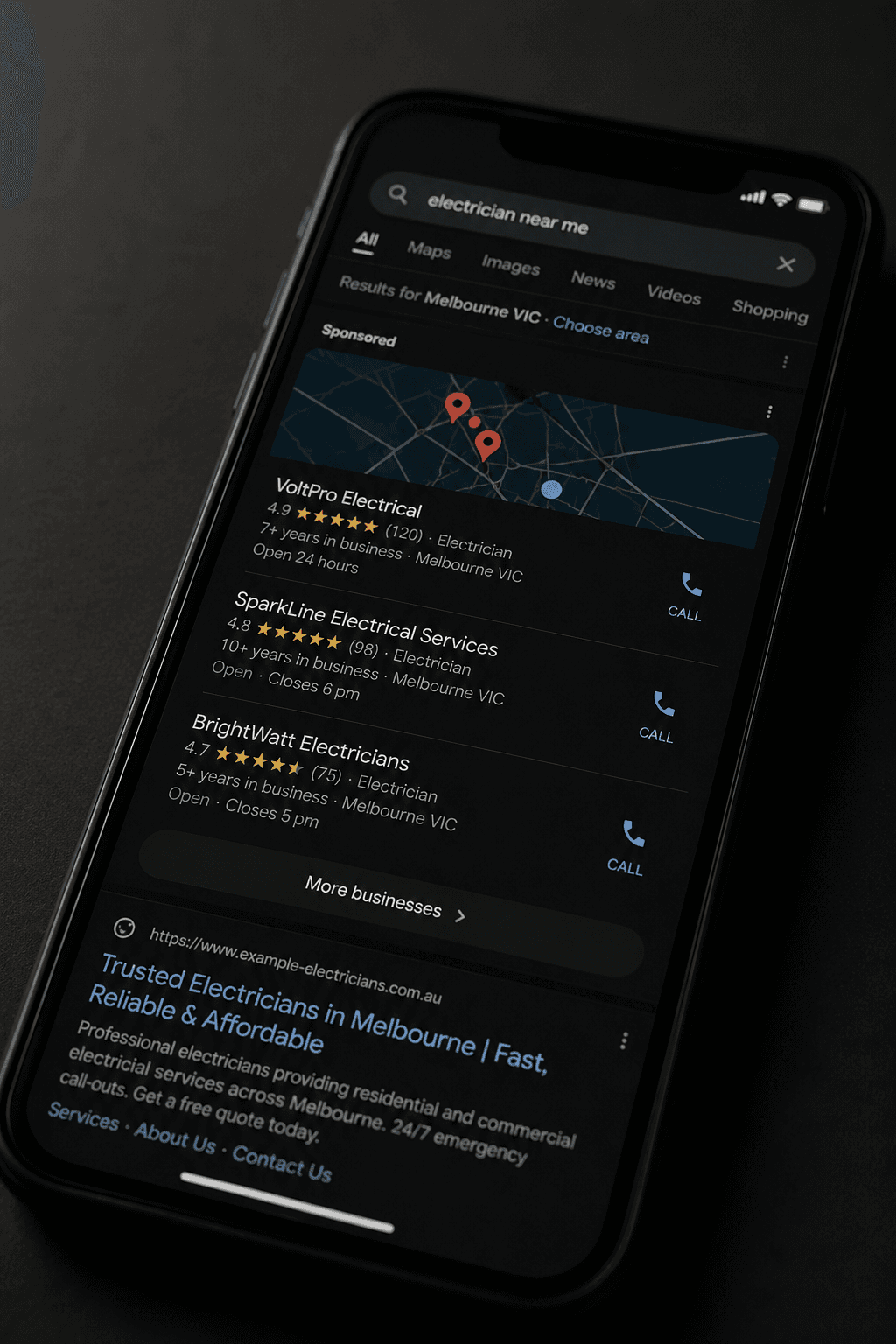
SEO
Local search visibility built into the structure of your site, not bolted on after. The right page titles, schema markup, and location signals so your business appears where customers are actually looking.

Google Business Profile
Your GBP listing is often the first thing a customer sees before your website. Set up correctly and kept current, it drives map pack appearances and direct enquiries from local searches.
Most underperforming websites do not fail because the business is poor. They fail because the structure is unclear, the services are too vague, and the site does not help people decide what to do next.

The Search and Buying Reality for Tunbridge Wells Businesses
Tunbridge Wells Sits in a Three-Way Competitive Overlap
A service business in Tunbridge Wells is rarely competing only against other TN1 and TN2 businesses. Providers from Tonbridge, Sevenoaks, and across the Kent and East Sussex border regularly optimise for Tunbridge Wells searches, which means the competitive field in local search is broader than it appears from a purely local perspective. A Tunbridge Wells trades business whose website does not clearly state its service area, its specific services, and its local credentials will lose searches to competitors from outside the immediate area whose sites are better structured. The town generates meaningful search volume for most trade categories, and that volume attracts well-optimised competitors consistently.
The Tunbridge Wells Customer Compares Carefully
Tunbridge Wells has a higher-than-average proportion of homeowners researching trades work carefully before making contact. Customers in TN1 and TN2 are more likely to visit 3 or 4 websites before deciding who to contact, and they look for trust signals that reflect quality rather than just availability. A trades website without visible accreditations, clear service descriptions, and evidence of real completed work will lose that comparison to a competitor who provides those signals prominently. The websites that convert in Tunbridge Wells are the ones that make the visitor feel confident before they pick up the phone, not the ones that leave them guessing.
The TN Postcode Area Generates Its Own Search Patterns
Customers in Tunbridge Wells search across TN1, TN2, TN3, and TN4, and many also search specifically for services in Southborough, Pembury, Speldhurst, and the surrounding villages. A trades business covering that area needs the website to reflect that coverage explicitly. A site that mentions only Tunbridge Wells as a location, without referencing the surrounding TN postcodes and villages the business actually works in, misses searches from those areas entirely. The service area page and the location signals within individual service pages need to map the real working area rather than just the postcode of the business address.
Poor Slug Structure Actively Hurts Rankings
A known issue for some Tunbridge Wells web design searches is that older pages built with slugs like "website-designers-tunbridge-wells" do not align cleanly with search terms like "web design tunbridge wells", and Google treats them as slightly mismatched. The slug is one of the signals Google uses to understand what a page is about, so a slug built around an older or less-searched variation of the target keyword leaves ranking potential on the table. For a Tunbridge Wells business investing in a properly structured site, getting the slug right from the start avoids the need to redirect and rebuild later.
Local Services Searches Peak in Spring and Autumn
Tunbridge Wells search patterns for trades and service businesses show a clear seasonal shape, with enquiry volumes rising significantly in spring from March onwards and again in September ahead of winter maintenance work. A trades website in Tunbridge Wells that is not visible in search results by early spring misses the period when local customers are most actively looking. Getting the site built and indexed in advance of that window, rather than during it, is the most reliable way to capture that seasonal search demand.
A Tunbridge Wells Website Built to Rank and Convert
Page Structure for a Tunbridge Wells Service Business
A Tunbridge Wells service business website needs a minimum of 6 to 9 pages to perform in local search. That means a homepage, individual pages for each core service, a service area page covering TN1 through TN4 and the surrounding villages served, and a contact page. Each service page needs to be written around the specific search intent for that service in the Tunbridge Wells area, not adapted from a generic template. A decorator covering Tunbridge Wells, Southborough, and Pembury needs each service to have its own page with location signals built in. Combining services into a single page is the most common structural mistake and the one most likely to prevent the site from appearing in specific service searches.
SEO Foundations for TN Postcode Coverage
Every build includes correctly structured title tags and meta descriptions, heading hierarchy, schema markup covering LocalBusiness and Service entity types with TN postcode service area signals, a sitemap, and Google Search Console setup. For a Tunbridge Wells business competing against providers from Tonbridge and Sevenoaks appearing in the same results, schema markup gives Google clear confirmation of what the business does and where it operates. The slug for the main Tunbridge Wells page is set to "web-design-tunbridge-wells" rather than older variants, ensuring the page targets the highest-volume search term directly.
Google Business Profile Setup
The GBP listing is the primary visibility channel for most Tunbridge Wells trades searches, with map pack results appearing above organic listings for the majority of high-intent local searches. MAI Solutions handles GBP setup and optimisation as part of the build, covering correct categorisation for the specific business type, service listings, TN postcode service area coverage, profile photos, and initial optimisation. For a Tunbridge Wells business competing in a market where customers compare carefully, having a fully populated and well-maintained GBP profile alongside a properly structured website gives the strongest combined visibility.
Pricing and Timeline
A Tunbridge Wells service business website through MAI Solutions typically falls between 1,500 and 2,800 pounds depending on the number of service pages, the TN postcode coverage required, and whether ongoing support is included. The build takes 3 to 5 weeks from a confirmed brief to launch. Providing service descriptions, accreditation details, the coverage area, and any existing photography early in the process keeps the build straightforward. A clear brief at the start consistently produces a better outcome than one that develops through multiple revision rounds.
Ongoing Support and Maintenance
The site runs on managed hosting with maintenance handled as standard. Tunbridge Wells is a competitive enough market that a site without any ongoing review will gradually lose ground to competitors who maintain theirs. Optional ongoing support covers new service pages, service area expansions, GBP management, and periodic SEO reviews. For a Tunbridge Wells trades business whose busy season leaves little time to think about the website, having maintenance and updates handled without requiring input is a practical advantage.
Is This the Right Fit?
This build is a strong fit for Tunbridge Wells trades and service businesses that rely on local search enquiries, have a defined set of services and coverage area, and want a site that performs commercially. It suits businesses that understand the site is a commercial tool rather than a brochure and are prepared to invest accordingly. It is not the right fit for businesses looking for the cheapest possible option, or for businesses that are uncertain about which services or areas they want the site to focus on. It is also not suited to anyone expecting organic rankings to appear immediately; the foundations need time to settle, typically 2 to 4 months before meaningful ranking movement is visible.
A simple, structured process that keeps the project clear from the first plan through to launch and ongoing support.
Examples of businesses that needed a stronger online presence, clearer service presentation, and a website that felt more credible from the first visit.







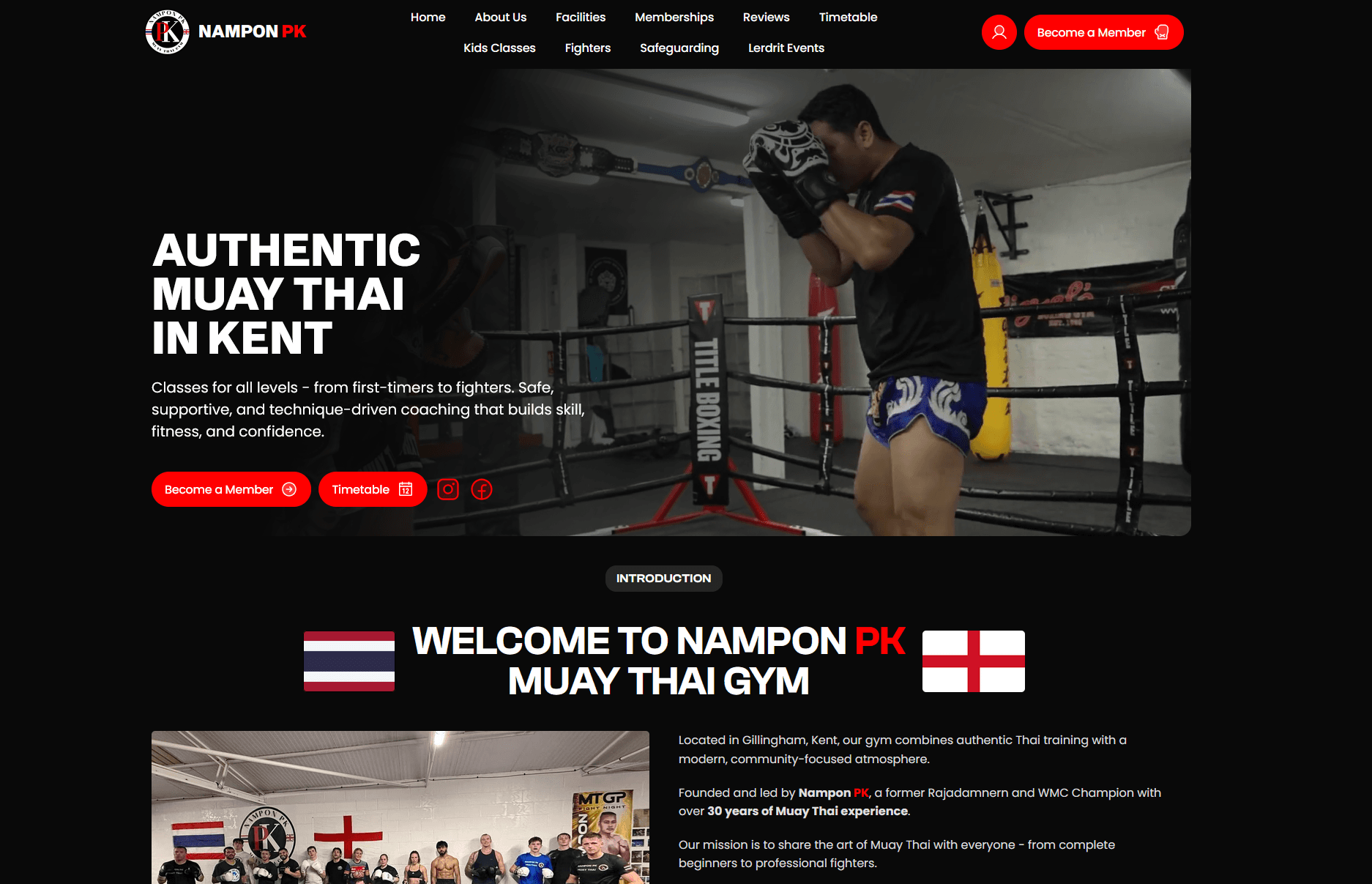

Structured websites for service businesses that need clearer messaging, stronger page flow, and a better path from visit to enquiry. Built to support trust, usability, and long-term growth.
Local SEO foundations built into the website structure, including service targeting, location relevance, internal linking, and page hierarchy that helps search engines understand what you do and where you work.
Google Business Profile setup and optimisation focused on stronger local visibility, accurate business information, and a profile that supports calls, map discovery, and enquiry-driven traffic.
Managed website hosting with ongoing support, maintenance, monitoring, and updates to keep the site secure, reliable, and useful after launch.