SEO in Kent is not one market. It is dozens of separate local markets, each with its own search behaviour, competitive landscape, and keyword patterns. A trades business in Faversham is not competing with the same businesses as one in Dartford, even if both are in Kent. Local SEO needs to be built around the specific towns, services, and customer behaviour that apply to a particular business, not applied as a generic county-wide strategy. Most businesses that have tried SEO and seen poor results were sold a generic service that ignored this completely.
Most underperforming websites do not fail because the business is poor. They fail because the structure is unclear, the services are too vague, and the site does not help people decide what to do next.


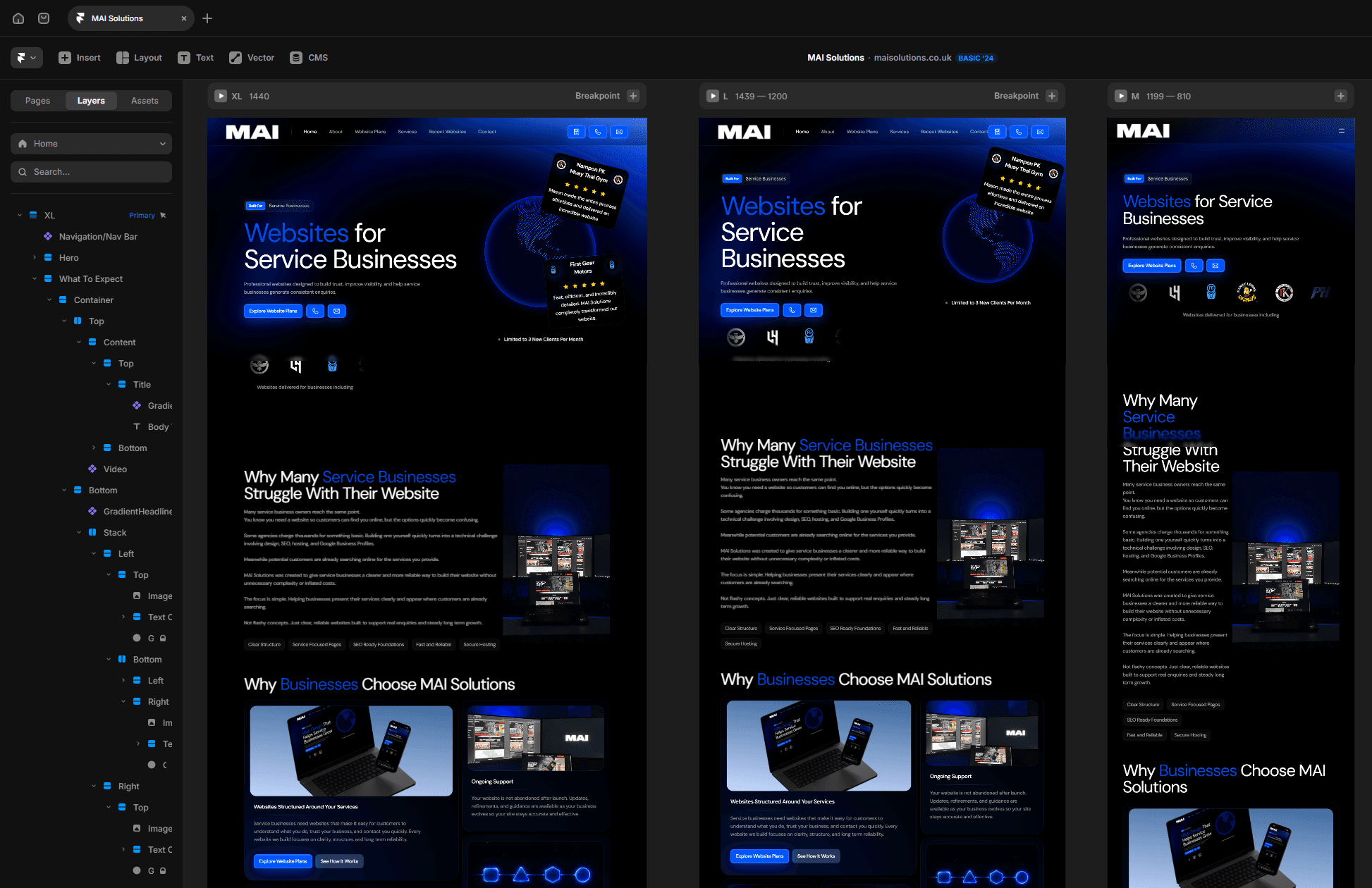
Web Design
A site built around how your customers search and decide, not just how it looks. Every page is structured to generate enquiries, with SEO foundations included from the start.
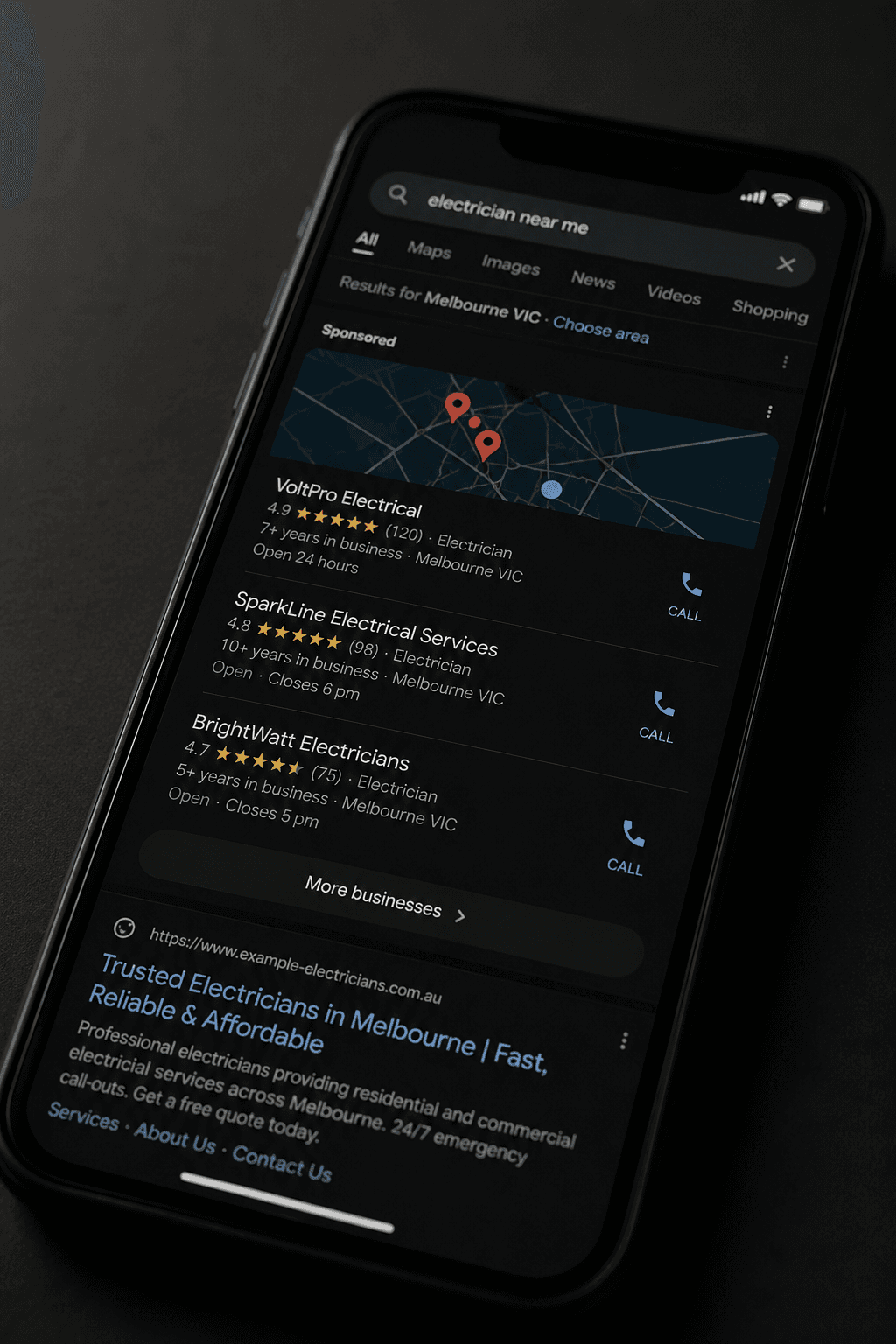
SEO
Local search visibility built into the structure of your site, not bolted on after. The right page titles, schema markup, and location signals so your business appears where customers are actually looking.

Google Business Profile
Your GBP listing is often the first thing a customer sees before your website. Set up correctly and kept current, it drives map pack appearances and direct enquiries from local searches.
Local SEO in Kent: The Reality Behind the Rankings
Kent Is Not One Market
Searching for SEO in Kent often leads to agencies offering county-wide packages that treat the whole of Kent as a single geographic target. The reality is that Maidstone, Canterbury, Tunbridge Wells, Dartford, and Folkestone are each distinct search markets with different competitive environments, different search volumes, and different buyer behaviours. A plumber in Tonbridge competing with Sevenoaks and Tunbridge Wells businesses in the same results has a completely different SEO challenge to a builder in Whitstable competing mainly for Canterbury-area searches. Understanding which specific searches matter for a given business, and how to build visibility for those searches without spreading resource too thinly, is the core of what effective local SEO in Kent actually involves.
Search Volume Varies Significantly Across Kent
One of the most common mistakes Kent businesses make when approaching SEO is assuming that any keyword with their service type and town will generate meaningful traffic. Keyword research across Kent reveals a significant variation in search volume between locations. Maidstone, Canterbury, and the Medway towns carry the highest volumes for most trade categories. Smaller towns like Aylesford, Snodland, or Paddock Wood carry near-zero volume for most standalone service keywords, which changes the SEO strategy entirely: those businesses need to rank for the higher-volume nearby town rather than trying to build volume where it does not exist. This is why keyword research should inform every SEO decision, not follow from it.
Google Business Profile Drives Most Local Enquiries
For Kent trades and service businesses, the Google Business Profile listing is typically the most important single visibility asset, ahead of the organic website rankings. Map pack results appear at the top of the search page for most local service searches, above all organic results. A business with a poorly configured or inactive GBP profile will lose enquiries to competitors whose profiles are properly set up even if the underlying websites are comparable. The GBP profile needs to be correctly categorised, consistently maintained, and backed by a website that matches its content and service coverage. The two work together; one without the other leaves significant visibility on the table.
The Difference Between Technical SEO and Content SEO
Kent businesses researching SEO often hear both terms used interchangeably, but they refer to different things. Technical SEO covers the structural foundations of the website: correct page titles, meta descriptions, heading hierarchy, schema markup, sitemap, page speed, and mobile performance. These are the baseline requirements that need to be in place before content has any chance of ranking. Content SEO covers the creation of pages and copy built around specific search terms. Both matter, but a site with excellent content and poor technical foundations will still underperform. Technical foundations come first, content builds on top of them. Most cheap SEO packages skip the technical work entirely and focus only on content, which is why they consistently underdeliver.
Why SEO Bolted On After a Build Usually Fails
A common pattern for Kent businesses is to launch a website and then attempt to add SEO afterwards, usually by paying an agency to produce blog posts or build backlinks. This rarely produces meaningful results because the underlying site structure was not built with search in mind. The page titles target the wrong terms, there are no individual service pages, the location signals are absent or inconsistent, and there is no schema markup in place. Adding content to a structurally poor site is like painting a building that has a cracked foundation. The most effective approach is to build the SEO foundations into the site from the start, so every page is structured to be found from day one.
What Local SEO for a Kent Business Actually Involves
Keyword Research and Location Targeting
Effective local SEO for a Kent business starts with understanding which searches are worth targeting. That means looking at actual search volumes for service and location combinations, identifying the towns where volume exists, and ruling out keyword targets that will never generate meaningful traffic regardless of ranking position. A Kent business covering a 20-mile radius might find that three towns account for 80 percent of the relevant search volume, with the remaining towns too low-volume to justify individual page investment. Building the SEO strategy around those findings produces a site that targets the right searches rather than one that wastes resource on terms no one is searching for.
On-Page SEO Foundations
Every page on the site needs to be structured correctly to have a chance of ranking. That means a properly written title tag that includes the target keyword for that page, a meta description that supports the title, a heading structure that makes the page content easy to read for both visitors and Google, and body copy that covers the subject with enough depth and specificity to be useful. For a Kent trades or service business, each service needs its own page targeting a specific service-plus-location combination. A Maidstone roofer needs a page targeting roofing Maidstone, not just a mention of Maidstone on a general services page.
Schema Markup for Local Businesses
Schema markup is the structured data that tells Google explicitly what type of business a site represents, which services it offers, where it operates, and how to contact it. For Kent trades and service businesses, LocalBusiness schema and Service schema are both included as standard in every build. This structured data improves the chance of appearing in local pack results and can enhance how the listing displays in search, including business type, service categories, and star ratings where applicable. Schema is not a ranking factor in isolation, but a site without it gives Google less to work with when deciding where to show it in local results.
Google Business Profile Setup and Optimisation
The GBP profile is set up and optimised as part of the build process for every Kent client. This includes selecting the correct primary and secondary business categories, populating the service listings, setting the service area correctly for the towns covered, adding profile photos, and completing the initial optimisation of the listing. For a Kent service business starting from scratch or rebuilding from a poorly configured profile, getting this right from the start has an immediate impact on map pack visibility. The profile also needs to be consistent with the website; discrepancies between the two send confusing signals to Google that hurt rather than help.
Pricing for Local SEO in Kent
SEO foundations are included as standard in every website build through MAI Solutions. The ongoing SEO support, covering content additions, service area expansions, ranking reviews, and GBP management, is available as a monthly support package starting from around 250 pounds per month. Standalone SEO audits and remediation work for existing sites are available on request, with pricing dependent on the size and condition of the existing site. A business spending money on paid advertising to compensate for poor organic visibility will typically find that investment in SEO foundations produces a better long-term return, though the results take 3 to 6 months to become measurable.
Is This the Right Fit?
Local SEO support from MAI Solutions is the right fit for Kent service businesses and trades that want to build organic visibility over the medium term and understand that results come from structure and consistency rather than quick fixes. It is particularly well suited to businesses that are already generating some organic traffic but know they are missing searches they should be appearing for, and to businesses launching a new site who want the foundations set up correctly from the start. It is not the right fit for businesses that need immediate lead volume and cannot wait for organic rankings to build. It is also not suited to businesses that want to try SEO for one month and assess results; meaningful organic performance typically takes 3 to 6 months to measure properly.
A simple, structured process that keeps the project clear from the first plan through to launch and ongoing support.
Examples of businesses that needed a stronger online presence, clearer service presentation, and a website that felt more credible from the first visit.







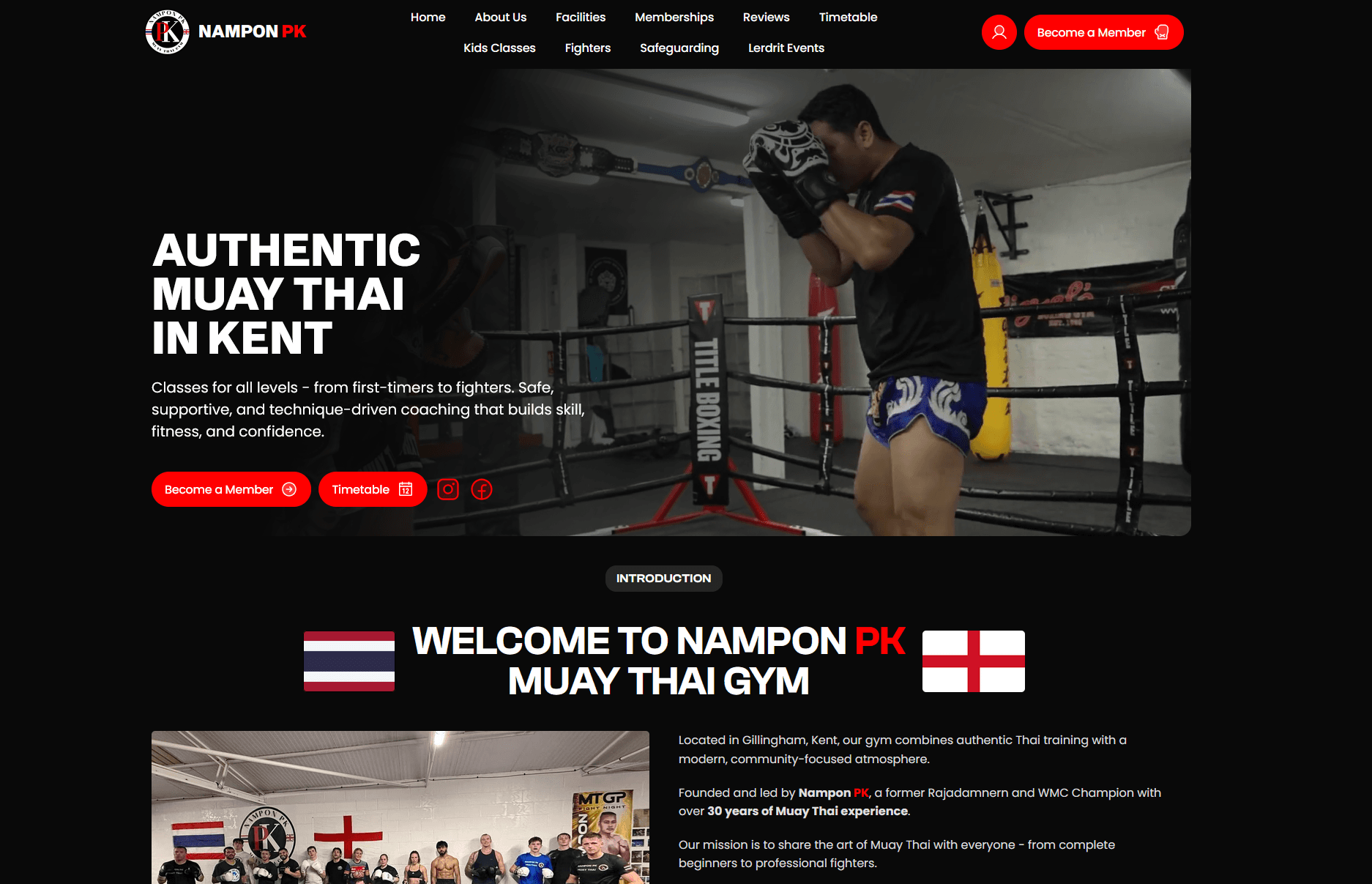

Structured websites for service businesses that need clearer messaging, stronger page flow, and a better path from visit to enquiry. Built to support trust, usability, and long-term growth.
Local SEO foundations built into the website structure, including service targeting, location relevance, internal linking, and page hierarchy that helps search engines understand what you do and where you work.
Google Business Profile setup and optimisation focused on stronger local visibility, accurate business information, and a profile that supports calls, map discovery, and enquiry-driven traffic.
Managed website hosting with ongoing support, maintenance, monitoring, and updates to keep the site secure, reliable, and useful after launch.