Web design in Croydon is a competitive market, and that competition means a poorly structured website gets buried quickly. Croydon businesses are up against providers from across South London and Surrey in the same search results, which makes the structure and SEO foundations of a site more important than they would be in a quieter local market. A site that looks fine but lacks the technical and structural foundations needed to rank will not generate organic enquiries regardless of how much was spent on the design. The gap between a Croydon website that works commercially and one that does not is almost always structural.
Most underperforming websites do not fail because the business is poor. They fail because the structure is unclear, the services are too vague, and the site does not help people decide what to do next.


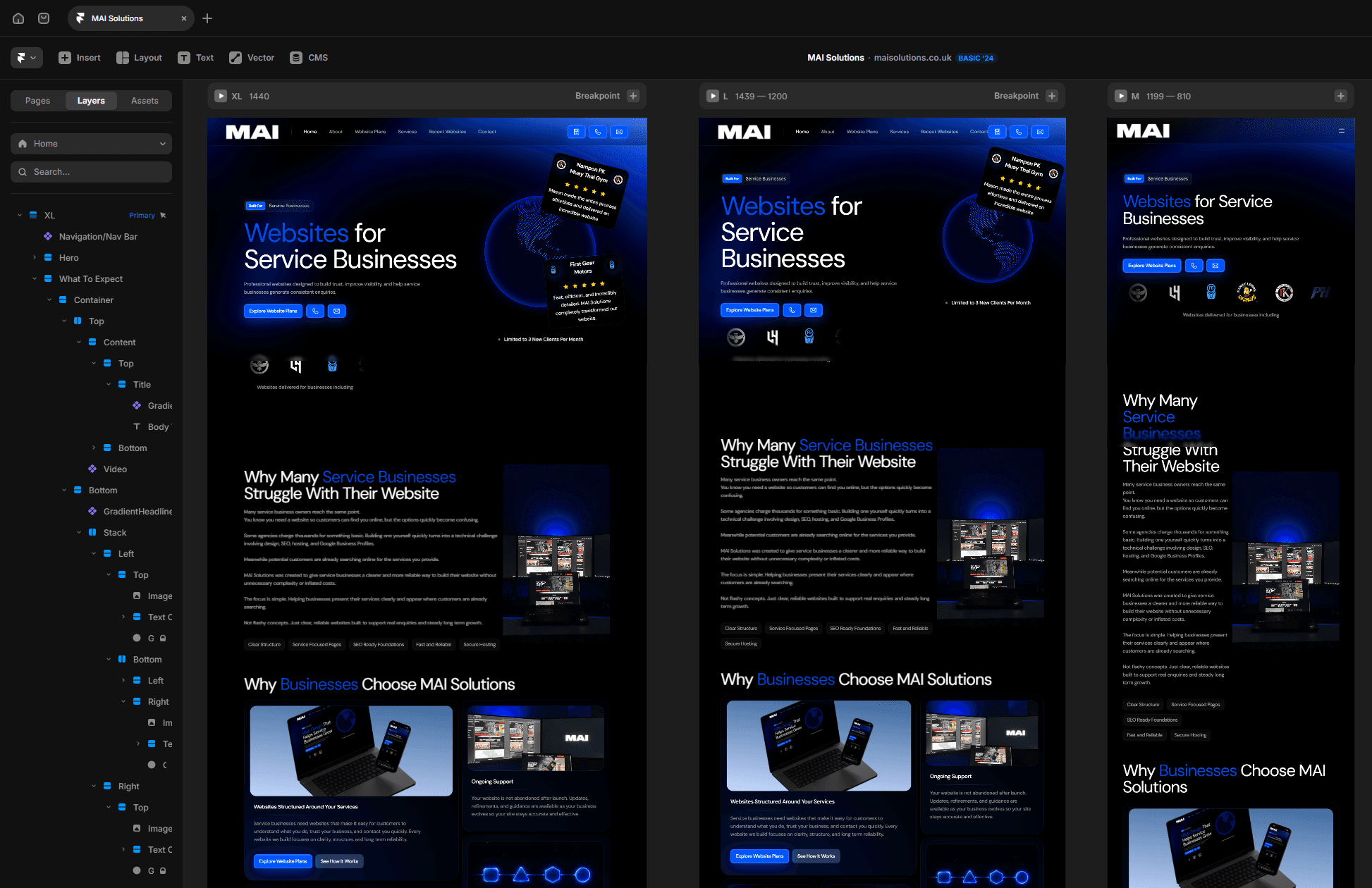
Web Design
A site built around how your customers search and decide, not just how it looks. Every page is structured to generate enquiries, with SEO foundations included from the start.
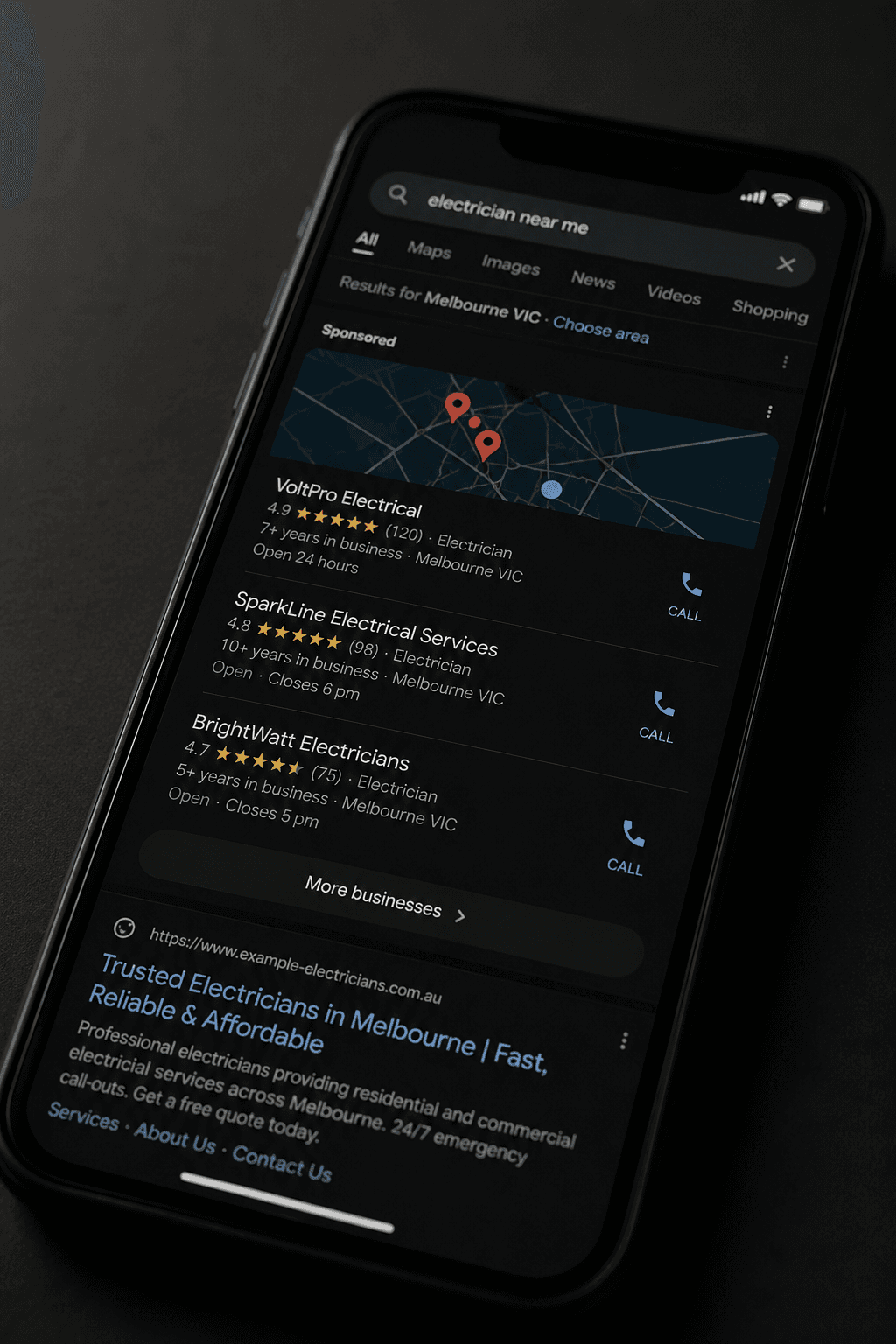
SEO
Local search visibility built into the structure of your site, not bolted on after. The right page titles, schema markup, and location signals so your business appears where customers are actually looking.
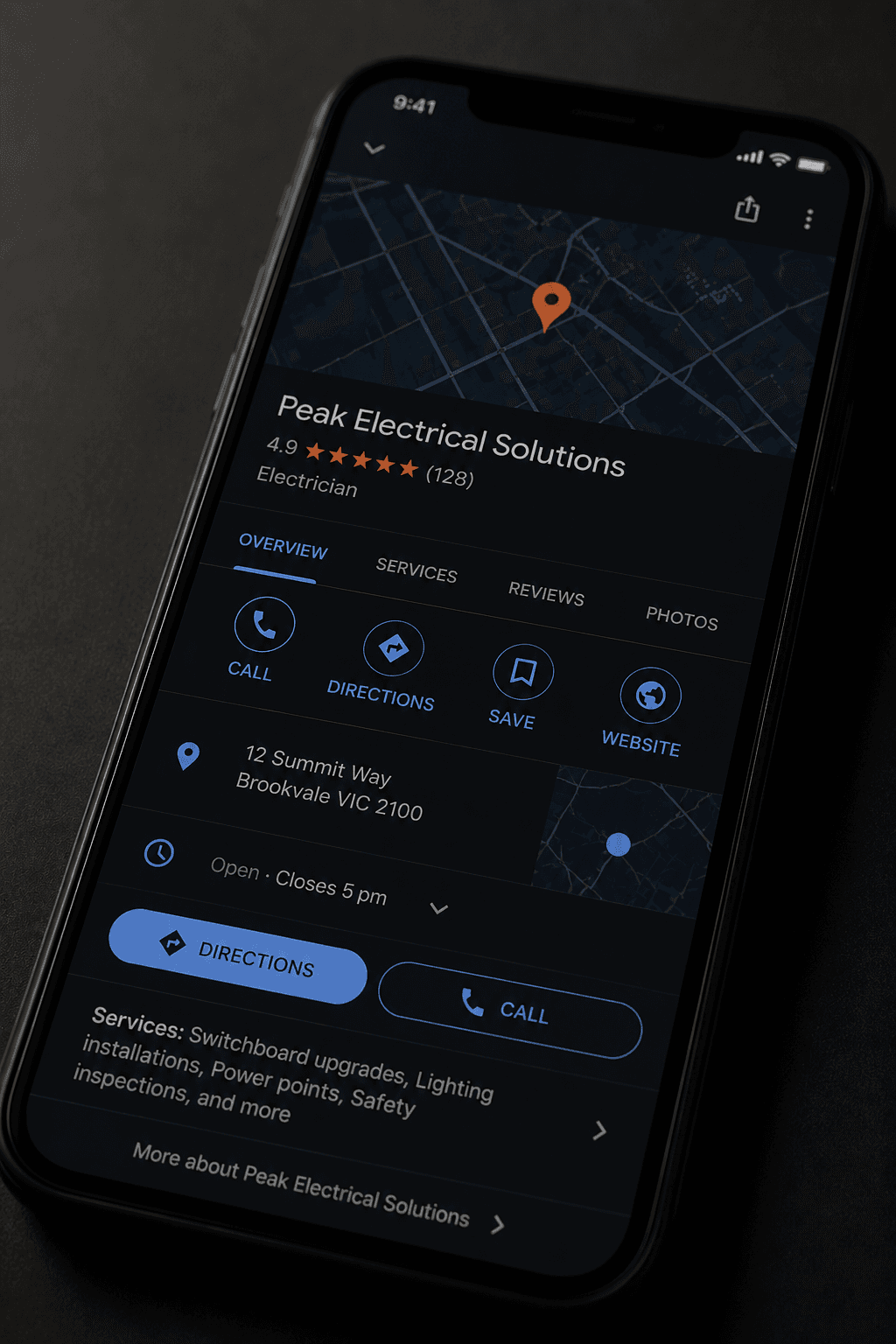
Google Business Profile
Your GBP listing is often the first thing a customer sees before your website. Set up correctly and kept current, it drives map pack appearances and direct enquiries from local searches.
The Search and Buying Reality for Croydon Businesses
Croydon Sits at a Competitive Crossroads
Croydon businesses compete for local search visibility against providers from Bromley, Sutton, South Norwood, and across the South London corridor, as well as businesses from the Surrey border towns who optimise for Croydon searches specifically. A trades business in Croydon searching for more enquiries is not just competing with other Croydon businesses; it is competing with anyone who has built a site structured to appear for Croydon-based searches. That level of competition means a site without proper location signals, service-specific pages, and correct schema markup will not appear where potential customers are looking, regardless of how long the business has been operating locally.
Customers in Croydon Compare Before They Contact
Search behaviour in urban South London markets like Croydon follows a clear pattern: customers open multiple results simultaneously and assess them quickly before deciding who to contact. A typical buyer comparing tradespeople or service providers will spend under 30 seconds on a site before deciding whether it is credible enough to stay on. The sites that win that comparison are not necessarily the cheapest or the most experienced; they are the ones that make the service area, the specific services offered, and the contact options immediately clear. A site that buries any of those things loses the enquiry to a competitor who made them easier to find.
Croydon Searches Span Multiple Postcodes and Boroughs
Croydon's postcode coverage spans CR0, CR2, CR3, CR4, CR7, CR8, and into neighbouring areas including Thornton Heath, Purley, Coulsdon, and Addiscombe. A business serving that whole footprint needs its website to reflect the coverage area explicitly. Google uses the information on the site, combined with the Google Business Profile, to determine where a business should appear in local results. A website that only mentions Croydon as a town without referencing the postcodes or surrounding areas it actually covers will miss searches from residents and businesses in those areas. A service area page that maps the real coverage helps both the visitor and Google understand the actual reach.
Trade and Service Businesses Face the Strongest Competition
The most competitive search categories in Croydon are trades and local services: builders, roofers, electricians, plumbers, decorators, landscapers, and similar businesses. These are also the searches with the highest commercial intent, which means getting visibility in those categories is valuable but requires a site built specifically for that purpose. A Croydon trades business with a generic five-page site and no location signals will not appear in the search results that its competitors with properly structured sites are occupying. The investment in a properly built site pays for itself relatively quickly when the alternative is missing out on enquiries that are going to someone else.
Poor Site Structure Loses Enquiries at Every Stage
A Croydon service business can lose a potential enquiry at several points before the visitor ever picks up the phone or fills in a contact form. Slow load time causes the visitor to leave before the page renders. No clear service area statement causes doubt about coverage. No individual service pages means the site fails to rank for specific searches. A buried or broken contact form means the visitor who did stay cannot follow through. Each of these is a structural failure, not a content problem, and each one costs real enquiries. A site built with the right foundations avoids all of them and gives the visitor a straightforward path to getting in touch.
A Croydon Website Built to Generate Enquiries
Page Structure for a Croydon Service Business
A service business website in Croydon needs a minimum of 6 to 10 pages to perform properly in local search. That means a homepage, individual pages for each main service offered, a service area page naming the postcodes and neighbouring areas covered, and a contact page. Trying to rank for multiple service terms from a single homepage does not work. Google needs a dedicated page for each service to match that page to the corresponding search. A roofer covering Croydon, Bromley, and Sutton needs separate pages for each location if they want to appear in searches from those areas. The exact page count depends on the breadth of services and the geographic scope of the business.
SEO Foundations for Croydon Businesses
Every build includes correctly structured title tags, meta descriptions, heading hierarchy, schema markup, sitemap, and Google Search Console setup. For a Croydon service business, LocalBusiness and Service schema are both included as standard. Schema markup tells Google explicitly what the business is, what it offers, and where it operates, including the Croydon postcodes and surrounding areas. This structured data helps Google connect the site to relevant local searches and can improve how the listing appears in results, including rich features like star ratings and service types. These foundations are built in during the build, not added later, because retrofitting them is always less effective.
Google Business Profile Setup and Optimisation
The GBP listing is what drives map pack results for local searches, and for most Croydon service businesses, those map pack results generate more direct enquiries than organic website visits in the early stages. The profile needs to be correctly categorised, fully populated, consistent with the website, and actively maintained to stay competitive in a market like Croydon where multiple businesses are targeting the same searches. MAI Solutions handles GBP setup and optimisation as part of the build, covering category selection, service listings, coverage area, profile photos, and initial optimisation. For a Croydon business starting from scratch, this is one of the most important parts of the setup.
Pricing and Timeline
A Croydon service business website built through MAI Solutions typically falls between 1,500 and 3,000 pounds depending on the number of service pages, the geographic scope, and whether ongoing support is included. The build process takes 3 to 5 weeks from a confirmed brief to launch. Providing service descriptions, coverage area details, and any existing photography or branding early in the process keeps the build straightforward. A clear brief at the start consistently produces a better result than one that develops through multiple revision rounds.
Ongoing Support and Site Maintenance
The site is hosted on managed infrastructure with maintenance handled as standard. Business owners do not need to deal with technical issues, updates, or performance problems. Optional ongoing support covers additions like new service pages, updated service area coverage, and periodic SEO reviews. For a Croydon business operating in a competitive market, a site that is never reviewed or updated will gradually lose ground to competitors who are actively maintaining theirs. Periodic updates, even minor ones, send signals to Google that the site is current and maintained.
Is This the Right Fit?
This build is the right fit for Croydon service businesses and trades that rely on enquiries from local search and want a site that performs commercially rather than just fulfilling the requirement of having a web address. It suits businesses with a defined set of services, a clear coverage area, and a genuine need to generate organic enquiries. It is not the right fit for businesses that want a minimal holding page with no structural or SEO consideration, or for businesses that are uncertain about which services or areas to prioritise. It is also not suitable for businesses whose primary concern is the lowest possible upfront cost, since a site built to that constraint rarely performs in a competitive local market like Croydon.
A simple, structured process that keeps the project clear from the first plan through to launch and ongoing support.
Examples of businesses that needed a stronger online presence, clearer service presentation, and a website that felt more credible from the first visit.







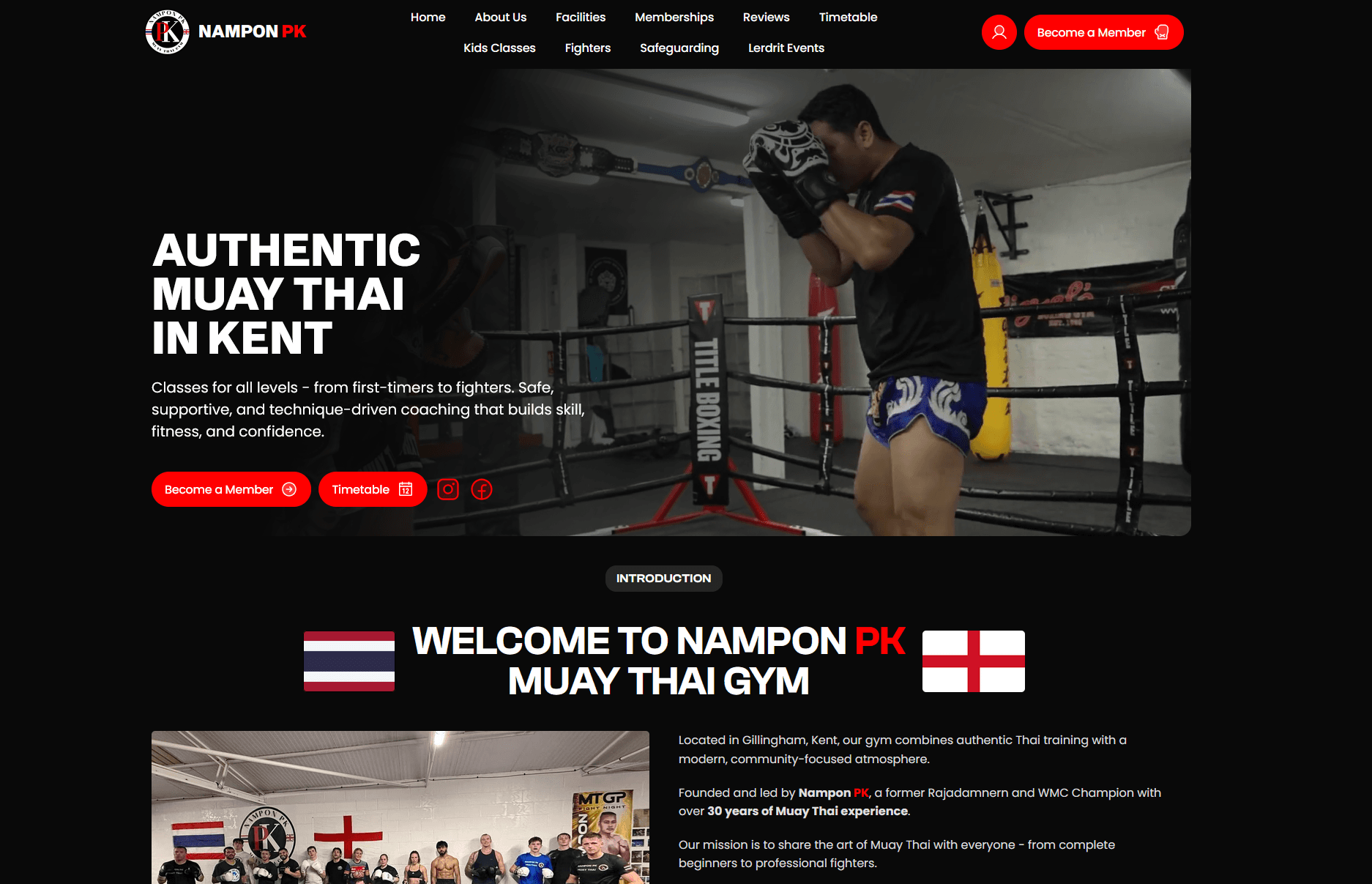

Structured websites for service businesses that need clearer messaging, stronger page flow, and a better path from visit to enquiry. Built to support trust, usability, and long-term growth.
Local SEO foundations built into the website structure, including service targeting, location relevance, internal linking, and page hierarchy that helps search engines understand what you do and where you work.
Google Business Profile setup and optimisation focused on stronger local visibility, accurate business information, and a profile that supports calls, map discovery, and enquiry-driven traffic.
Managed website hosting with ongoing support, maintenance, monitoring, and updates to keep the site secure, reliable, and useful after launch.