Canterbury draws search traffic from a wide surrounding area, including Whitstable, Faversham and the rural CT postcodes, which means a trades website that only references Canterbury itself is leaving a significant volume of potential enquiries unaddressed. Customers searching for a service in this area tend to do their research before calling, checking two or three businesses and looking for clear signals that the company covers their location and handles their specific type of job. A site built without that structure makes that decision easy for the visitor, just not in your favour.
Most underperforming websites do not fail because the business is poor. They fail because the structure is unclear, the services are too vague, and the site does not help people decide what to do next.


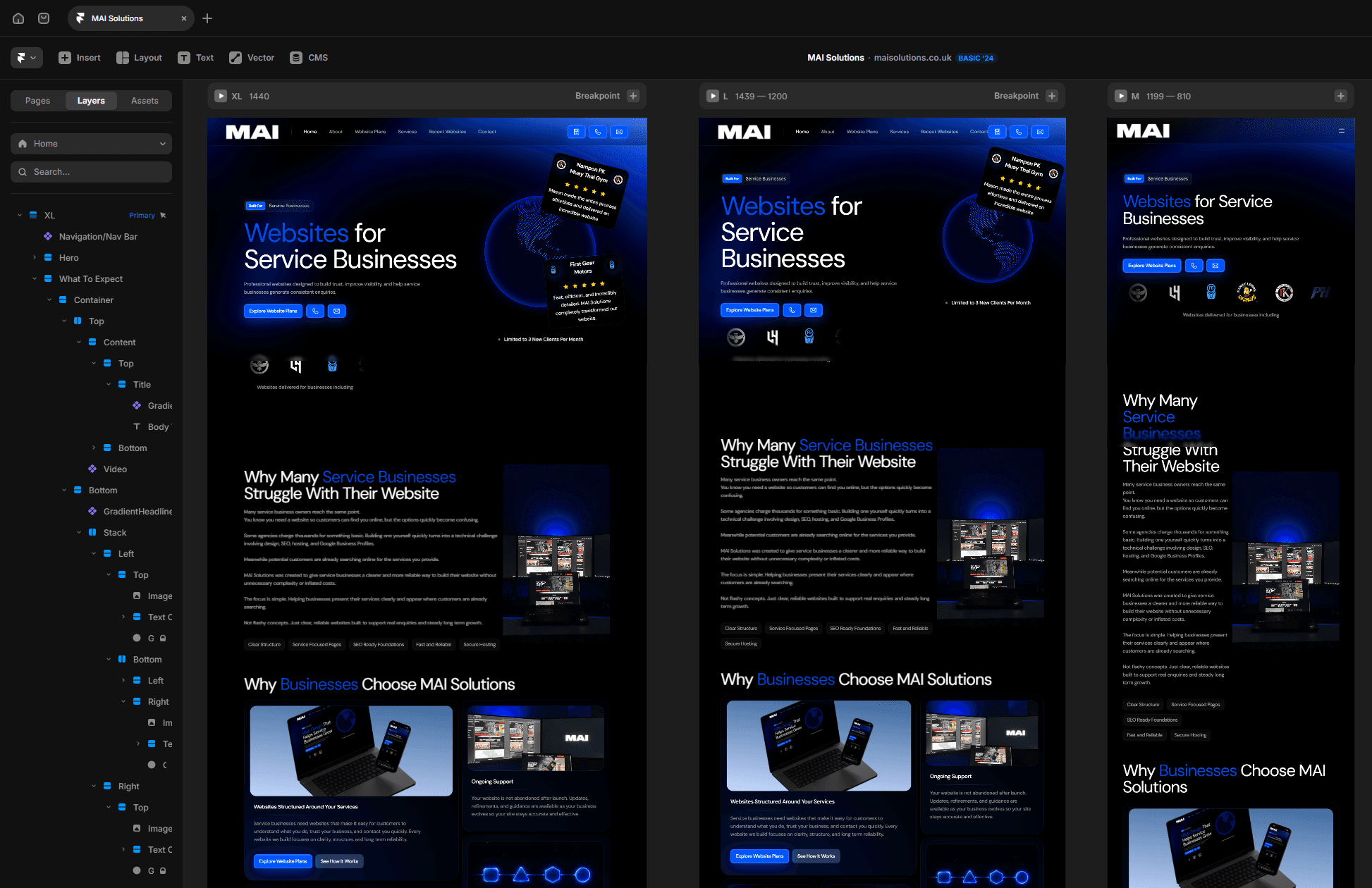
Web Design
A site built around how your customers search and decide, not just how it looks. Every page is structured to generate enquiries, with SEO foundations included from the start.
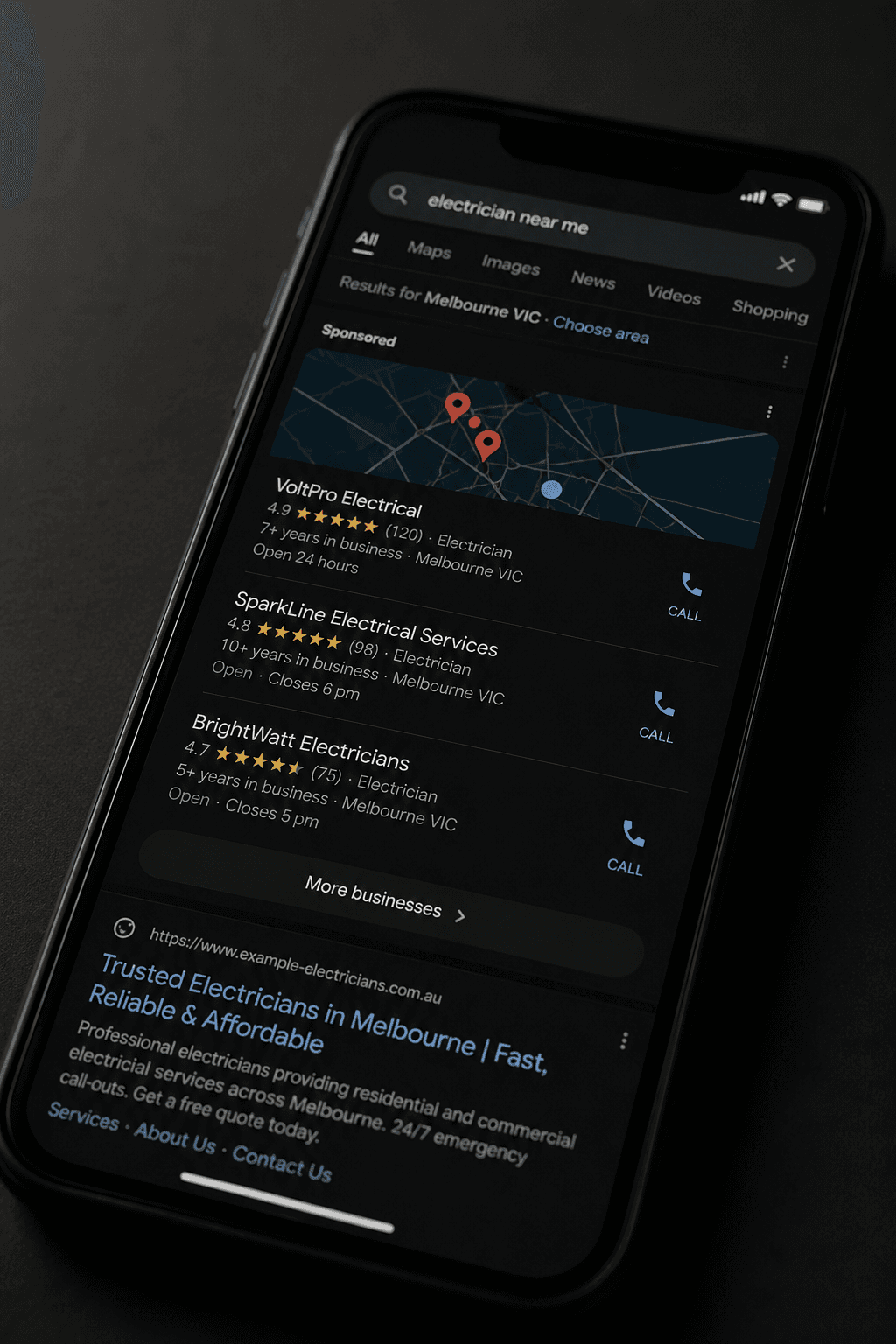
SEO
Local search visibility built into the structure of your site, not bolted on after. The right page titles, schema markup, and location signals so your business appears where customers are actually looking.

Google Business Profile
Your GBP listing is often the first thing a customer sees before your website. Set up correctly and kept current, it drives map pack appearances and direct enquiries from local searches.
How Canterbury Businesses Lose Enquiries in a High-Volume Local Market
Canterbury Generates More Trades Search Volume Than Its Size Suggests
Canterbury produces unusually high search volumes for most trade and service categories relative to its population, driven by a combination of high homeowner density in CT1, CT2, and CT3, a large student and rental property market requiring maintenance services, and the surrounding rural CT postcodes whose residents search for Canterbury-based providers. A trades business in Canterbury is operating in one of the stronger local search markets in Kent, which means the competition for the top positions is genuine. A site without individual service pages, clear CT postcode coverage, and a properly configured Google Business Profile will not compete for that volume consistently.
The CT Postcode Area Stretches Well Beyond the City Centre
Canterbury's search footprint covers CT1, CT2, CT3, CT4, and into the rural parishes surrounding the city: Bridge, Chartham, Sturry, Herne Bay, and the Blean villages all generate search demand for Canterbury-area trades. A business covering that entire footprint needs the website to reflect it. A site that references only Canterbury without naming the surrounding CT postcodes and villages it actually serves will miss searches from customers in those areas who are actively looking for a local provider. The service area page for a Canterbury business is one of the most important pages on the site, because the geographic coverage is broader than a typical Kent market town.
Canterbury Customers Research Carefully for Higher-Value Work
Canterbury has a significant professional and homeowner demographic across CT1 and CT2 who approach higher-value trades work like extensions, roofing, and electrical installations with careful research before making contact. These customers compare 3 to 5 options, look for trust signals including accreditations, visible previous work, and clear service descriptions, and are influenced by how professional and specific the website feels. A generic site that could belong to any trades business in any town will not win that comparison in Canterbury. The businesses that generate consistent enquiries for higher-value work in CT postcodes are the ones whose websites feel specific, credible, and locally relevant.
The Student and Rental Market Creates Consistent Lower-Value Demand
Alongside the higher-value residential work, Canterbury's large student population and rental property stock creates consistent demand for responsive maintenance trades: plumbers, electricians, and general maintenance contractors who can work quickly in tenanted properties. This is a different buyer than the homeowner planning a renovation, and the searches reflect that difference. A Canterbury trades business covering both markets needs its website to speak to both, with service pages that address the residential project customer and the responsive maintenance customer separately rather than trying to serve both from a single generic services page.
Heritage Constraints Affect What Canterbury Businesses Can Offer
Canterbury's status as a heritage city with a significant proportion of listed buildings and conservation areas affects the scope of work that trades businesses can take on and the questions customers ask before proceeding. A Canterbury builder, roofer, or electrician working regularly with listed properties needs the website to address those constraints directly, because a potential customer with a listed building is specifically looking for a contractor who understands heritage requirements. Including that specificity on the relevant service pages makes the business more credible to exactly the customers who are most likely to proceed with high-value work.
A Canterbury Website Built to Rank and Generate CT Postcode Enquiries
Page Structure for a Canterbury Service Business
A Canterbury service business website needs between 7 and 10 pages to perform effectively in local search. That means a homepage, individual pages for each core service written around CT postcode search intent, a service area page covering CT1 through CT4 and the surrounding parishes, and a contact page. Canterbury's broad search footprint means the service area page carries more weight than in a smaller market town, because customers from Bridge, Chartham, Sturry, and the Blean villages need to be able to confirm coverage quickly. Each service page should address the specific search intent for that service in Canterbury, with heritage and conservation area relevance noted where the service type regularly involves listed properties.
SEO Foundations for CT Postcode Coverage
Every build includes correctly structured title tags and meta descriptions for each page, heading hierarchy, schema markup covering LocalBusiness and Service entity types with CT postcode service area signals, a sitemap, and Google Search Console setup. Canterbury's search volume makes the technical foundations particularly important: in a market generating the number of searches Canterbury does, the difference between a site with correct schema markup and one without it is a meaningful number of missed map pack appearances. LocalBusiness and Service schema are both included as standard, giving Google explicit confirmation of the business type, services, and the full CT postcode coverage area.
Google Business Profile Setup for Canterbury
The GBP listing drives a significant share of direct enquiries for Canterbury trades searches given the volume of map pack appearances for CT postcode searches. MAI Solutions handles GBP setup and optimisation as part of every build, covering correct categorisation for the specific business type, service listings, CT1 through CT4 service area coverage including surrounding parishes, profile photos, and initial optimisation. For a Canterbury business serving both the city centre and the surrounding rural CT postcodes, getting the GBP service area configured correctly to reflect that full coverage is one of the most important parts of the setup.
Pricing and Timeline
A Canterbury service business website through MAI Solutions typically falls between 1,500 and 3,000 pounds depending on the number of service pages, the breadth of CT postcode coverage, and whether ongoing support is included. Canterbury builds often sit toward the higher end of that range given the number of service pages required to cover the market effectively. The build takes 3 to 5 weeks from a confirmed brief to launch. Providing service descriptions, CT coverage details, accreditations, and any photography early in the process keeps the build on schedule.
Ongoing Support and Maintenance
The site runs on managed hosting with maintenance included. Canterbury is a strong enough search market that competitors regularly improve their sites, which means a Canterbury business site that is never reviewed or updated will gradually lose ground in the rankings. Optional ongoing support covers new service pages, service area expansions to additional CT postcodes, GBP management, and periodic SEO reviews. For a Canterbury trades business handling both residential and commercial work, keeping the site current as the business evolves is a practical commercial consideration.
Is This the Right Fit?
This build is well suited to Canterbury trades and service businesses that have genuine coverage of the CT postcode area, a defined set of services, and a need to generate organic enquiries from a market that has real search volume. It works particularly well for businesses covering higher-value work in the CT1 and CT2 residential areas and for businesses that work regularly with listed properties and want the site to reflect that capability. It is not the right fit for businesses wanting a minimal holding site, or for businesses that are unclear about which services or CT postcodes to prioritise. It also does not suit anyone expecting immediate organic rankings; Canterbury's search volume means meaningful ranking positions typically take 3 to 5 months to develop after a well-structured launch.
A simple, structured process that keeps the project clear from the first plan through to launch and ongoing support.
Examples of businesses that needed a stronger online presence, clearer service presentation, and a website that felt more credible from the first visit.







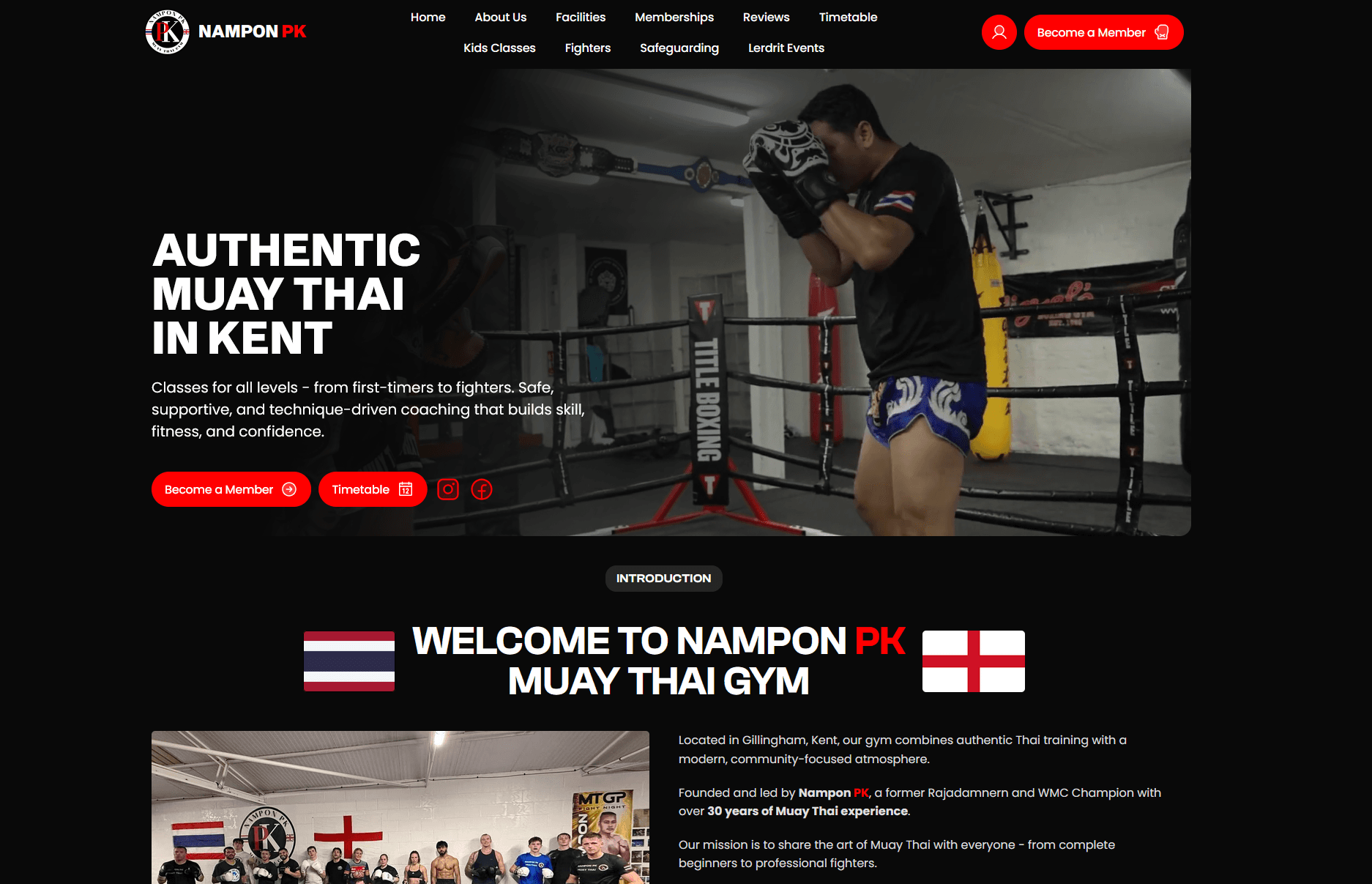

Structured websites for service businesses that need clearer messaging, stronger page flow, and a better path from visit to enquiry. Built to support trust, usability, and long-term growth.
Local SEO foundations built into the website structure, including service targeting, location relevance, internal linking, and page hierarchy that helps search engines understand what you do and where you work.
Google Business Profile setup and optimisation focused on stronger local visibility, accurate business information, and a profile that supports calls, map discovery, and enquiry-driven traffic.
Managed website hosting with ongoing support, maintenance, monitoring, and updates to keep the site secure, reliable, and useful after launch.