Web design Maidstone businesses can rely on starts with understanding how customers in the ME postcode area actually search and compare before making contact. Maidstone is the highest-volume local search market in Kent for trades and service businesses, which means the competition is real and the businesses winning enquiries consistently are the ones with sites built around how customers decide, not just how a site looks.
Most underperforming websites do not fail because the business is poor. They fail because the structure is unclear, the services are too vague, and the site does not help people decide what to do next.


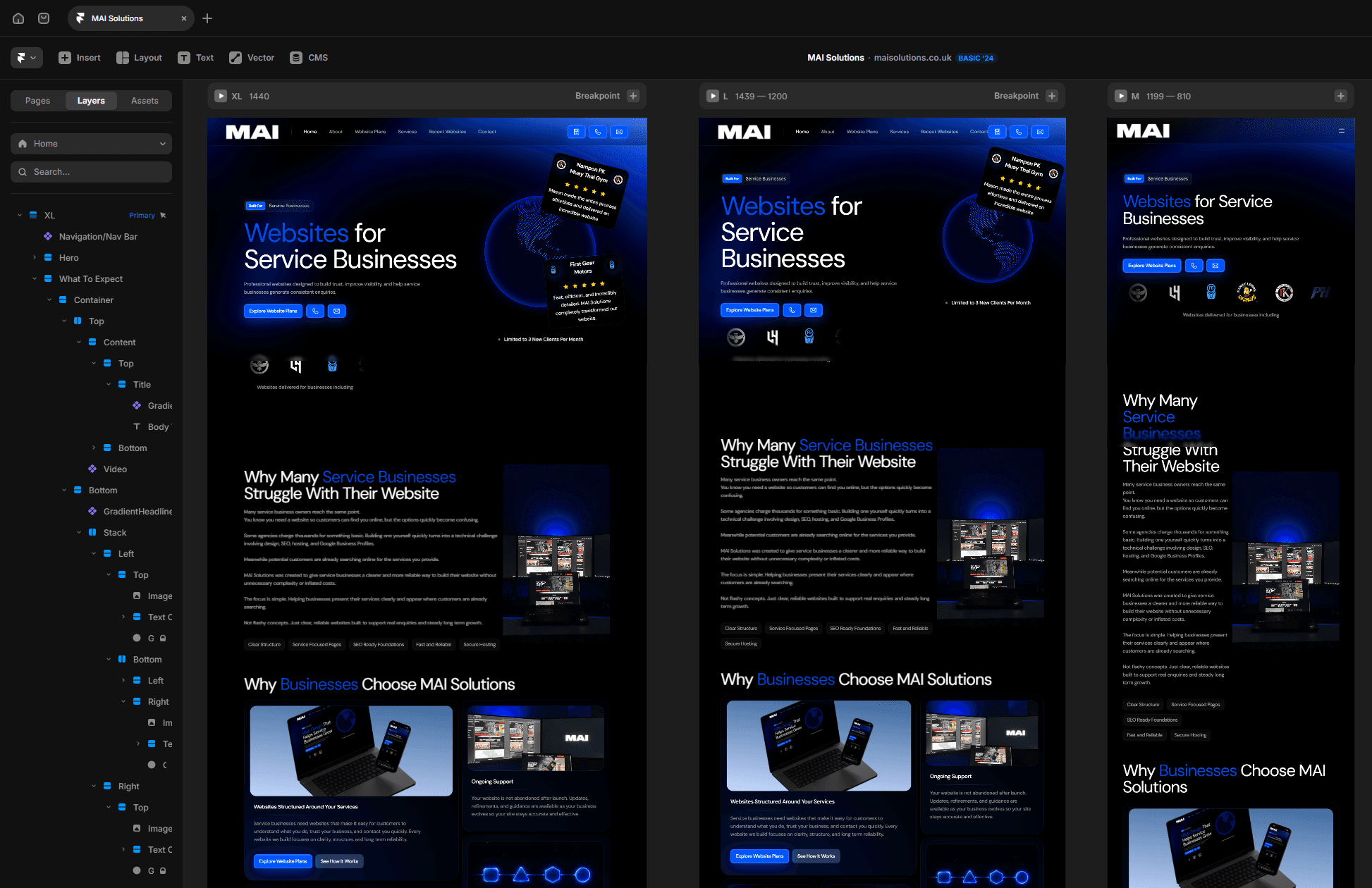
Web Design
A site built around how your customers search and decide, not just how it looks. Every page is structured to generate enquiries, with SEO foundations included from the start.
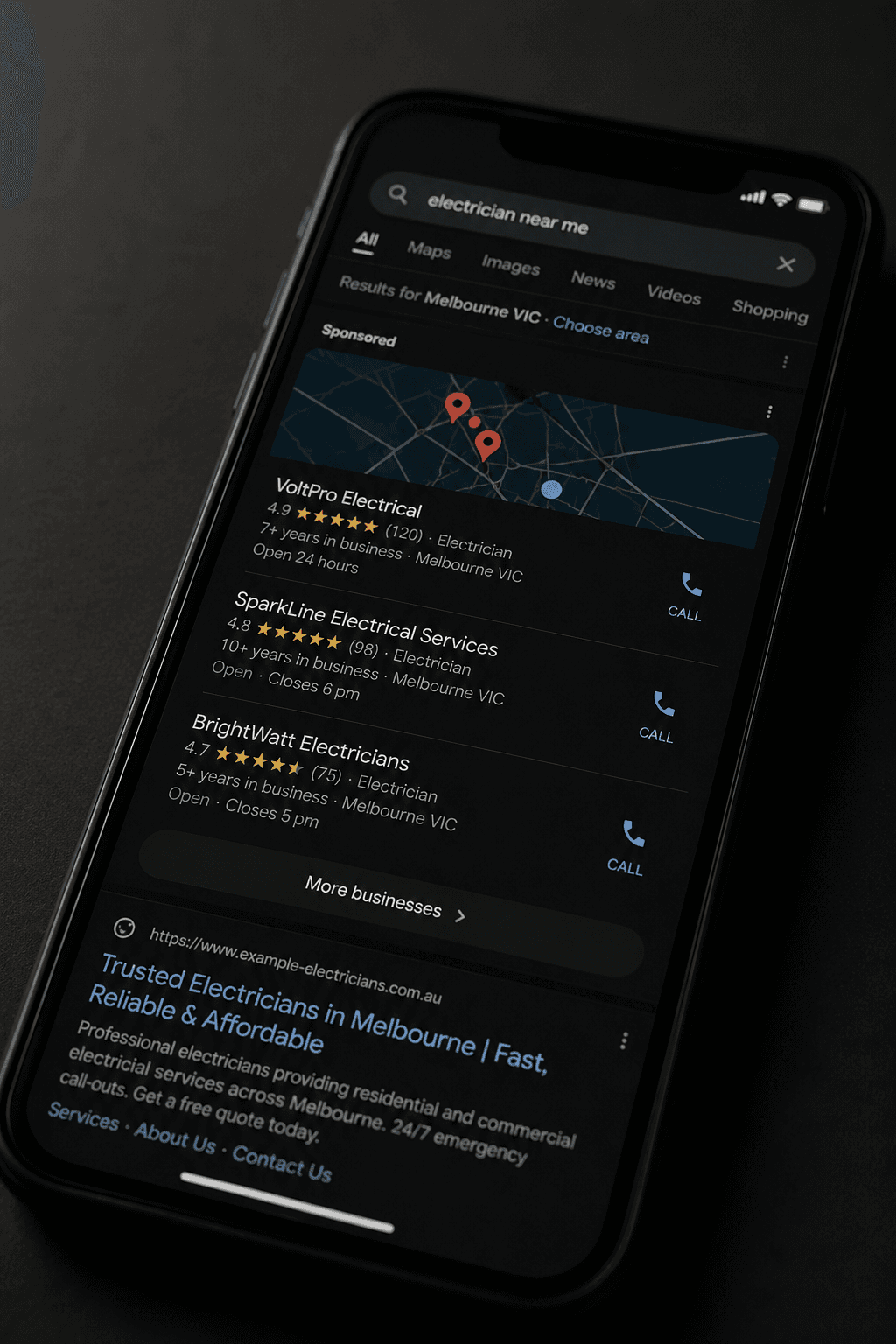
SEO
Local search visibility built into the structure of your site, not bolted on after. The right page titles, schema markup, and location signals so your business appears where customers are actually looking.
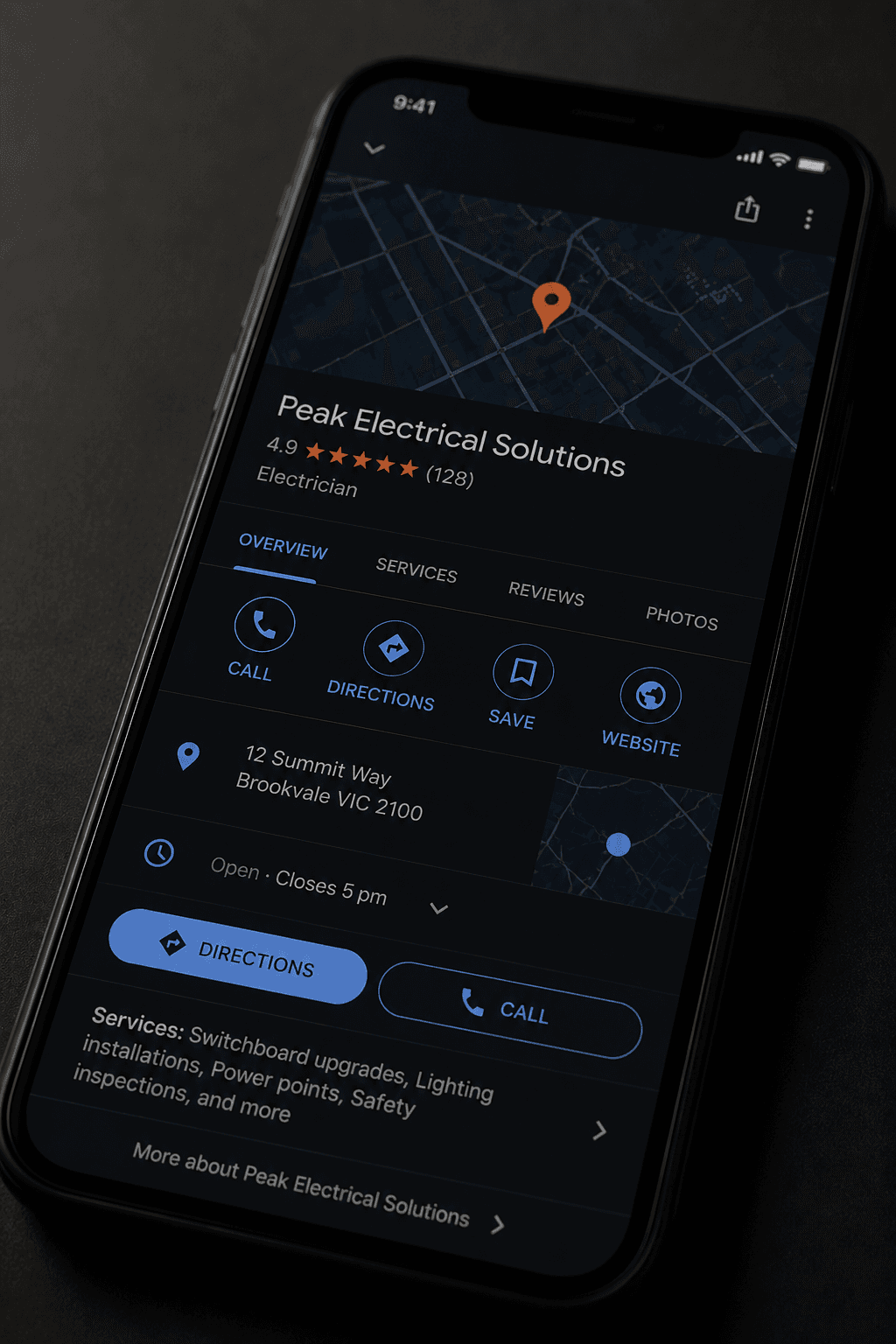
Google Business Profile
Your GBP listing is often the first thing a customer sees before your website. Set up correctly and kept current, it drives map pack appearances and direct enquiries from local searches.
How Customers in Maidstone Search and Why Structure Decides Who Gets the Enquiry
Maidstone Is the Most Contested Local Search Market in Kent
Maidstone generates more local search volume for trades and service businesses than any other single town in Kent. A plumber, roofer, or landscaper here competes not just with other ME14 and ME15 businesses, but with providers from Aylesford, Bearsted, and the Medway towns who optimise specifically to appear in Maidstone searches. The businesses winning those searches are rarely the cheapest or the most experienced. They are the ones with websites that rank, load quickly, and make it easy for a visitor to decide to get in touch. A site without proper location signals and individual service pages will not break into the top results regardless of how long the business has been trading.
The ME Postcode Search Pattern Most Sites Miss
Customers in Maidstone rarely search just by town name. They search by service type with a location modifier, and often with a postcode or nearby village included: roofer ME14, plumber Bearsted, electrician Loose, builder ME15. A website that only targets the broad Maidstone term misses a significant share of searches with genuine buying intent. The site needs to reflect the actual coverage area, typically ME14, ME15, ME16, and surrounding villages, and those signals need to be built into the page structure rather than mentioned once in a footer. Most local sites do not do this, which is why the same few businesses keep appearing at the top of Maidstone search results.
Why Visitors Compare Three or Four Businesses Before Contacting Anyone
Customers searching for a trades or service business in Maidstone do not usually contact the first result they see. They open two or three tabs, scan each site quickly, and contact whichever one makes them most confident. That scan takes less than thirty seconds. If the site does not clearly show what services are covered, where the business operates, and how to get in touch, the visitor closes the tab and tries the next result. A site with a single broad services page and a generic contact form loses that comparison almost every time, regardless of how good the business actually is.
How Comparison Behaviour Shapes the Enquiry Rate
The businesses that win the most enquiries in Maidstone are not necessarily the best ranked. They are the ones whose sites make a visitor feel certain enough to act. That certainty comes from specific service pages that match what the customer searched for, visible trust signals like a named business and real contact details, and a clear next step that does not require the visitor to work out what to do. A site that makes someone think too hard at any of those points loses them. The structure of the site is what creates that certainty or removes it, and most Maidstone sites are not built with that in mind.
Why Generic Sites Underperform in a Competitive ME Postcode Market
Generic websites built on page builders often look reasonable but perform poorly in Maidstone searches because they lack the page depth Google needs to understand what a business does and where it operates. A single services page covering five different trades does not give search engines enough signal to rank any of them confidently. Separate pages for each service, each structured around how a customer searches for that specific trade in the ME postcode area, build the kind of topical relevance that moves a site up the results over time. The businesses that have invested in that structure are the ones that are consistently difficult to displace.
What a Web Design Project for a Maidstone Business Actually Involves
Page Structure for the ME Postcode Area
A properly structured site for a Maidstone trades or service business typically runs to eight to twelve pages at minimum. That means a homepage targeting the main service and location, individual pages for each core service, a location page covering the ME postcode area and surrounding villages, an about page, and a contact page. For businesses covering multiple trades or a wider area, the page count goes higher. A single-page or three-page site can look clean but rarely gives search engines enough to work with in a market as competitive as Maidstone, where established businesses have had years to build page depth and local relevance.
SEO Foundations Built Into the Build
Every site built for a Maidstone business includes the SEO work as part of the build, not as an optional extra. That means page titles and meta descriptions written to match how customers actually search, heading structure that supports keyword relevance without reading as forced, internal links connecting the service and location pages into a coherent cluster, and LocalBusiness and Service schema markup so Google understands what the business does and where it operates. A correctly configured schema can also improve how the business listing appears in search results, which matters in a market where customers are comparing several results side by side.
Google Business Profile Setup and Maidstone Map Pack Visibility
For most Maidstone service businesses, the Google Business Profile is the first thing a potential customer sees before they even reach the website. A correctly set up profile, with accurate categories, a complete service list, regular posts, and photo updates, drives map pack appearances for searches like plumber Maidstone or electrician ME15. The profile and the website reinforce each other. A well-structured site increases the authority of the GBP listing, and a well-managed GBP listing drives traffic to the site. Both are included in the MAI Solutions setup for Maidstone clients.
Pricing and Timeline for a Maidstone Web Design Project
A standard build for a Maidstone service business typically falls in the six to ten page range, which sits at a £525 build fee with a £45 monthly retainer covering hosting, updates, and ongoing support. Larger builds with individual service pages and location coverage across the ME postcode area run from £750 upwards. Most projects are scoped, agreed, and delivered within two to three weeks from the point of briefing. There are no ongoing agency fees or account management costs. The monthly retainer covers what it says it covers.
What the Monthly Retainer Covers After Launch
The £45 monthly retainer is not a holding fee. It covers managed hosting on a fast, secure server, any content updates needed as services change or expand, ongoing technical checks, and direct access if anything needs fixing. For Maidstone businesses running a live site that generates enquiries, having someone available to update the site quickly when services or pricing change is worth more than it costs. Sites that go untouched for months tend to drift in rankings as competitors update theirs.
Who This Is and Is Not the Right Fit For
This works well for Maidstone trades and service businesses that want a site built to generate enquiries from local search, are willing to invest in a proper build rather than the cheapest option available, and want ongoing support included rather than being handed a site and left to manage it alone. It is not the right fit for businesses that want the lowest possible upfront cost regardless of what that produces, businesses still unclear on which services they want to focus on, or businesses that want a site built once and never maintained. A site that sits untouched for two years in a market like Maidstone will not hold its rankings.
A simple, structured process that keeps the project clear from the first plan through to launch and ongoing support.
Examples of businesses that needed a stronger online presence, clearer service presentation, and a website that felt more credible from the first visit.







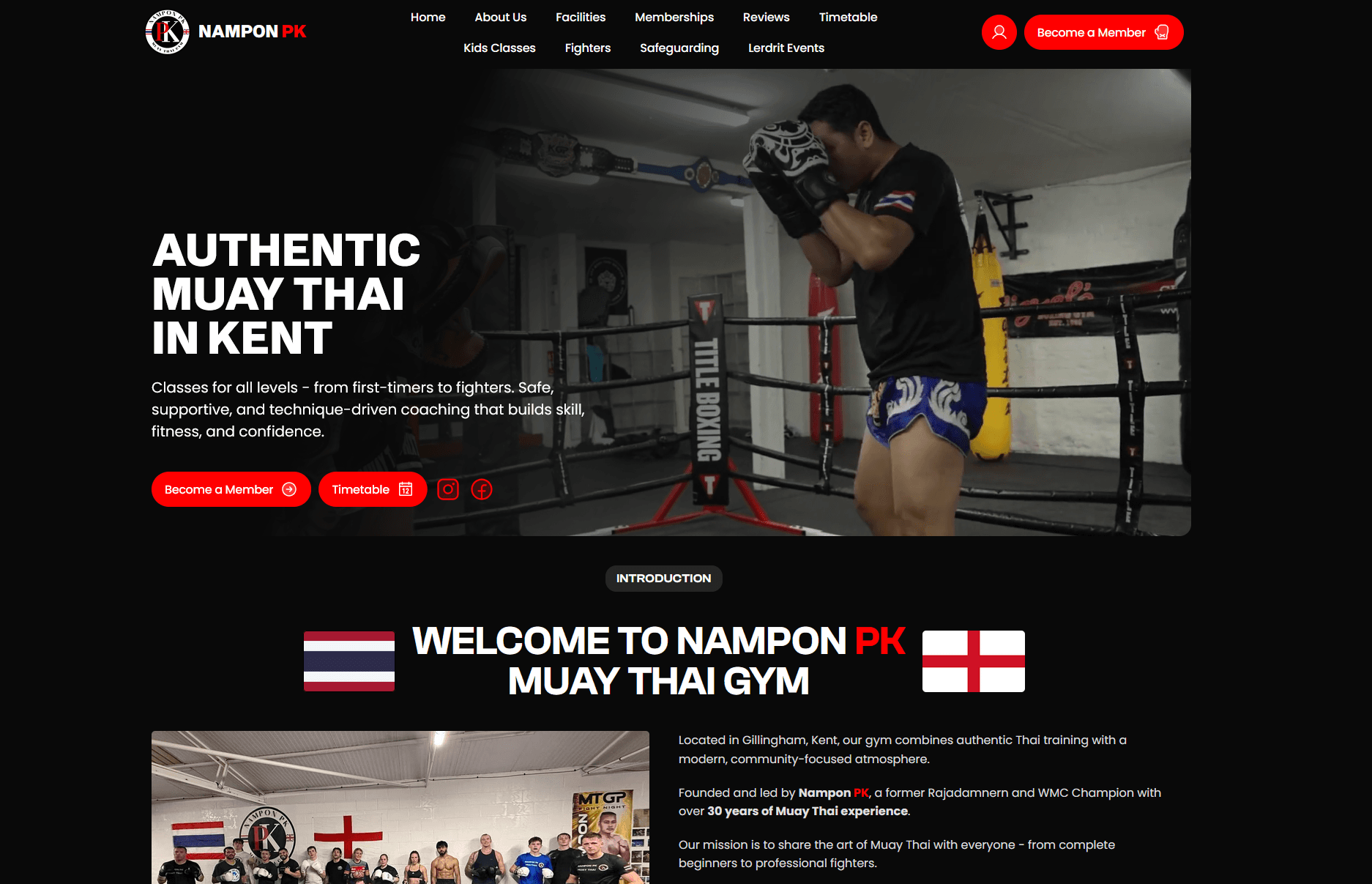

Structured websites for service businesses that need clearer messaging, stronger page flow, and a better path from visit to enquiry. Built to support trust, usability, and long-term growth.
Local SEO foundations built into the website structure, including service targeting, location relevance, internal linking, and page hierarchy that helps search engines understand what you do and where you work.
Google Business Profile setup and optimisation focused on stronger local visibility, accurate business information, and a profile that supports calls, map discovery, and enquiry-driven traffic.
Managed website hosting with ongoing support, maintenance, monitoring, and updates to keep the site secure, reliable, and useful after launch.