Ashford is a growing town with increasing search volume for trades and service businesses across TN23 and TN24, but most local businesses have not invested in the SEO foundations needed to take advantage of that demand. The result is that a relatively small number of well-structured businesses dominate the local results while the majority either do not appear or appear inconsistently. For a trades business in Ashford, getting the foundations right now, before the market becomes more competitive, is a straightforward commercial decision.

Web Design
A site built around how your customers search and decide, not just how it looks. Every page is structured to generate enquiries, with SEO foundations included from the start.
SEO
Local search visibility built into the structure of your site, not bolted on after. The right page titles, schema markup, and location signals so your business appears where customers are actually looking.

Google Business Profile
Your GBP listing is often the first thing a customer sees before your website. Set up correctly and kept current, it drives map pack appearances and direct enquiries from local searches.
Most underperforming websites do not fail because the business is poor. They fail because the structure is unclear, the services are too vague, and the site does not help people decide what to do next.

Why Local SEO in Ashford Is Worth Getting Right Now
Ashford Is a Growing Search Market With Room to Move
Ashford is expanding, both in population and in commercial activity, which is driving consistent growth in local search volume for trades and service businesses across TN23 and TN24. Compared to more established Kent markets like Maidstone or Canterbury, Ashford has lower search volumes but also significantly lower competition for most trade search terms. That combination means a well-structured business can gain first-page positions in Ashford local search relatively quickly and hold them without the level of ongoing effort required in denser markets. The opportunity window exists now and will narrow as more businesses invest in their local SEO foundations.
What the Local Search Landscape in Ashford Actually Looks Like
For most trades searches in Ashford, the first page of results is currently occupied by a mix of national directories, a handful of well-structured local businesses, and several generic websites that are ranking more by default than by design. The businesses that appear in those positions are not necessarily the best in the area. They are the ones whose websites and Google Business Profiles are structured well enough to be ranked. A trades business in Ashford with a properly structured website and an active Google Business Profile can genuinely compete for those positions and capture a significant share of the local enquiry flow.
Why Most Ashford Businesses Are Missing Out on Local Search Traffic
The most common reason a trades business in Ashford is not appearing consistently in local search results is structural, not competitive. A website with all services on a single page, no location-specific content, and an inconsistently maintained Google Business Profile gives search engines very little to work with. Those businesses are not being outcompeted by better businesses. They are being outranked by businesses that have simply taken the time to structure their online presence properly. The fix is not complex, but it does require getting the foundations right rather than applying cosmetic improvements to a site that is structurally weak.
How the TN Postcode Area Affects the Strategy
Ashford sits at the heart of the TN postcode area, which extends into a wide rural and semi-rural catchment covering towns and villages across a significant radius. A trades business based in Ashford but serving customers in Tenterden, Headcorn, Charing, and the surrounding villages has a much larger search opportunity than a website focused only on Ashford town centre will capture. Building location-specific content that reflects the full service area, including the rural TN postcodes, is what allows the site to generate enquiries from across that broader catchment rather than competing only for the town itself.
What Local SEO for an Ashford Business Actually Involves
A Website Structured for TN Postcode Searches
The website is the foundation of local SEO for any Ashford business. That means individual service pages with content built around each specific job type, a clear service area page covering TN23, TN24, and the surrounding postcodes served, and a technical structure that search engines can index and understand properly. A generic website with a combined services page will not compete effectively for specific Ashford search terms, regardless of how well everything else in the local SEO process is handled. The site structure has to be right first.
Google Business Profile Setup and Management for Ashford
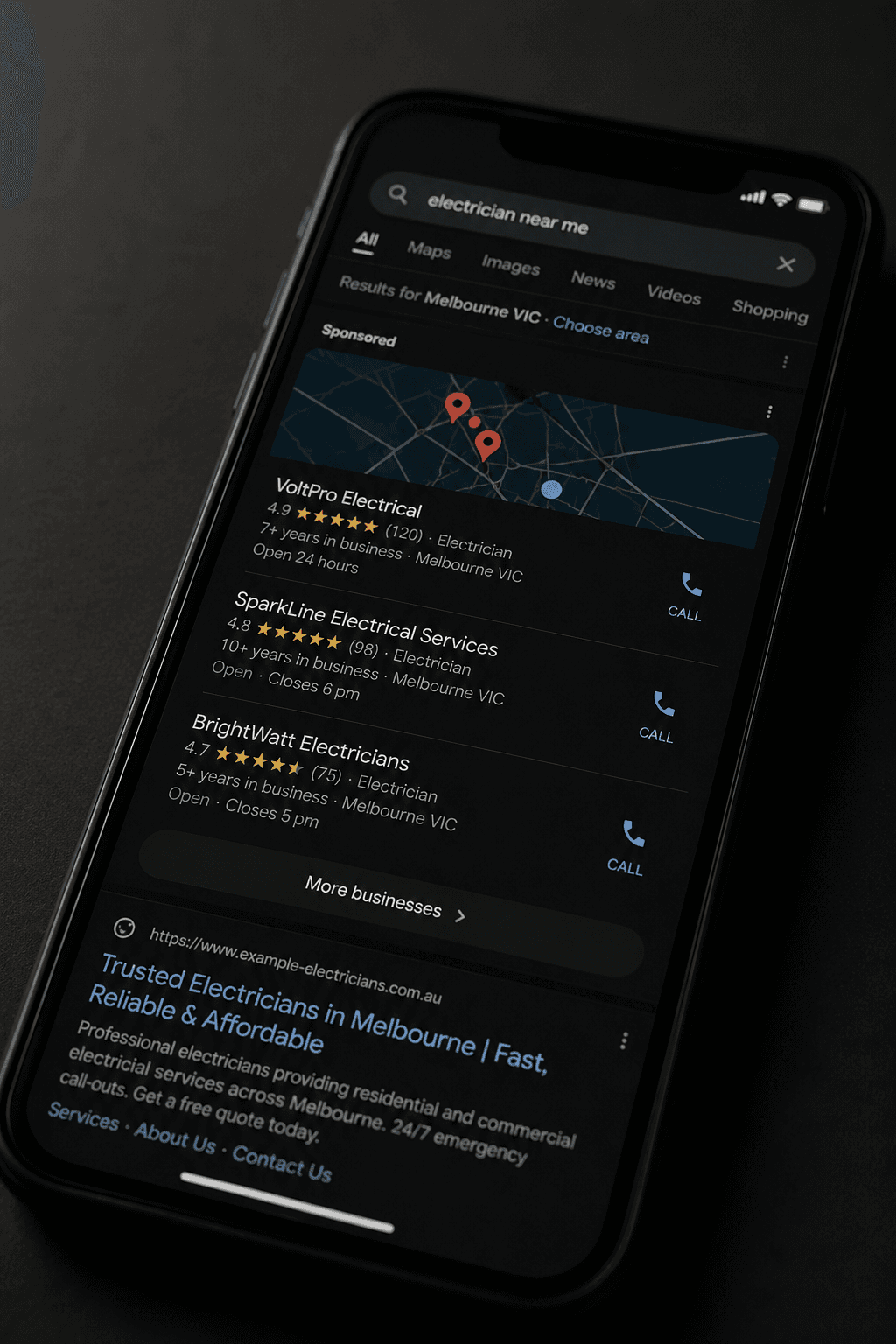
The Google Business Profile is one of the most important local search assets a business in Ashford can have. For many trades searches, the map pack results sit above the organic listings entirely, which means appearing in the top three positions is often more valuable than appearing in the organic results below. Getting into those positions requires a fully completed profile with the right primary and secondary categories, an accurate service area covering the TN postcode area, recent photos, and a consistent flow of reviews. A profile set up once and not maintained will lose ground to competitors who keep theirs active.
Location-Specific Content for the Wider Ashford Area
A trades business serving customers across the Ashford area and the surrounding rural TN postcodes needs its website to reflect that. Location pages or location-specific content within service pages that address the key towns and areas served, with enough substance to be genuinely relevant rather than thin placeholder text, are what establish the broader local relevance needed to capture enquiries from across the full working area. This is particularly important for Ashford given the wide rural catchment the town serves.
Consistent Business Information Across All Platforms
Inconsistencies in the business name, address, or phone number across the website, Google Business Profile, and other online directories create uncertainty for search engines and can suppress local search rankings. Auditing and correcting those inconsistencies is a foundational step. It is one of the least visible parts of local SEO but one of the most commonly overlooked, and in a market like Ashford where small structural advantages can make a significant difference to rankings, it matters.
Monitoring and Ongoing Improvement
Local search results in Ashford will shift over time as more businesses invest in their online presence and the market becomes more competitive. Monitoring rankings, updating content, and keeping the Google Business Profile active are ongoing requirements for maintaining the search positions built through the initial work. The support included after the initial build covers this ongoing management so the investment continues to produce results rather than gradually losing ground.
Who This Is the Right Fit For
This service works best for established trades and service businesses in Ashford that want consistent enquiries from local search and are ready to invest in the foundations that produce them. It is not the right fit for a new business looking for instant results or a business that wants a cheap quick fix without the structural work needed to make it sustainable. Local SEO in Ashford takes less time to show results than in more competitive markets, but it still requires getting the foundations right rather than applying surface-level changes to a structurally weak site.
A simple, structured process that keeps the project clear from the first plan through to launch and ongoing support.
Examples of businesses that needed a stronger online presence, clearer service presentation, and a website that felt more credible from the first visit.









Structured websites for service businesses that need clearer messaging, stronger page flow, and a better path from visit to enquiry. Built to support trust, usability, and long-term growth.
Local SEO foundations built into the website structure, including service targeting, location relevance, internal linking, and page hierarchy that helps search engines understand what you do and where you work.
Google Business Profile setup and optimisation focused on stronger local visibility, accurate business information, and a profile that supports calls, map discovery, and enquiry-driven traffic.
Managed website hosting with ongoing support, maintenance, monitoring, and updates to keep the site secure, reliable, and useful after launch.