A roofer website that lists all services on one page, has no location-specific content, and relies on a single contact form is doing the bare minimum, and the bare minimum does not perform well in local search. Customers searching for roofing work in a specific area are looking for a business that clearly covers their location and clearly handles their type of job, whether that is an emergency repair, a flat roof replacement, or a full re-roof. A website built around those specific needs, with properly separated service pages and clear local relevance, will consistently generate more enquiries than one that tries to cover everything from a single generic page.

Web Design
A site built around how your customers search and decide, not just how it looks. Every page is structured to generate enquiries, with SEO foundations included from the start.
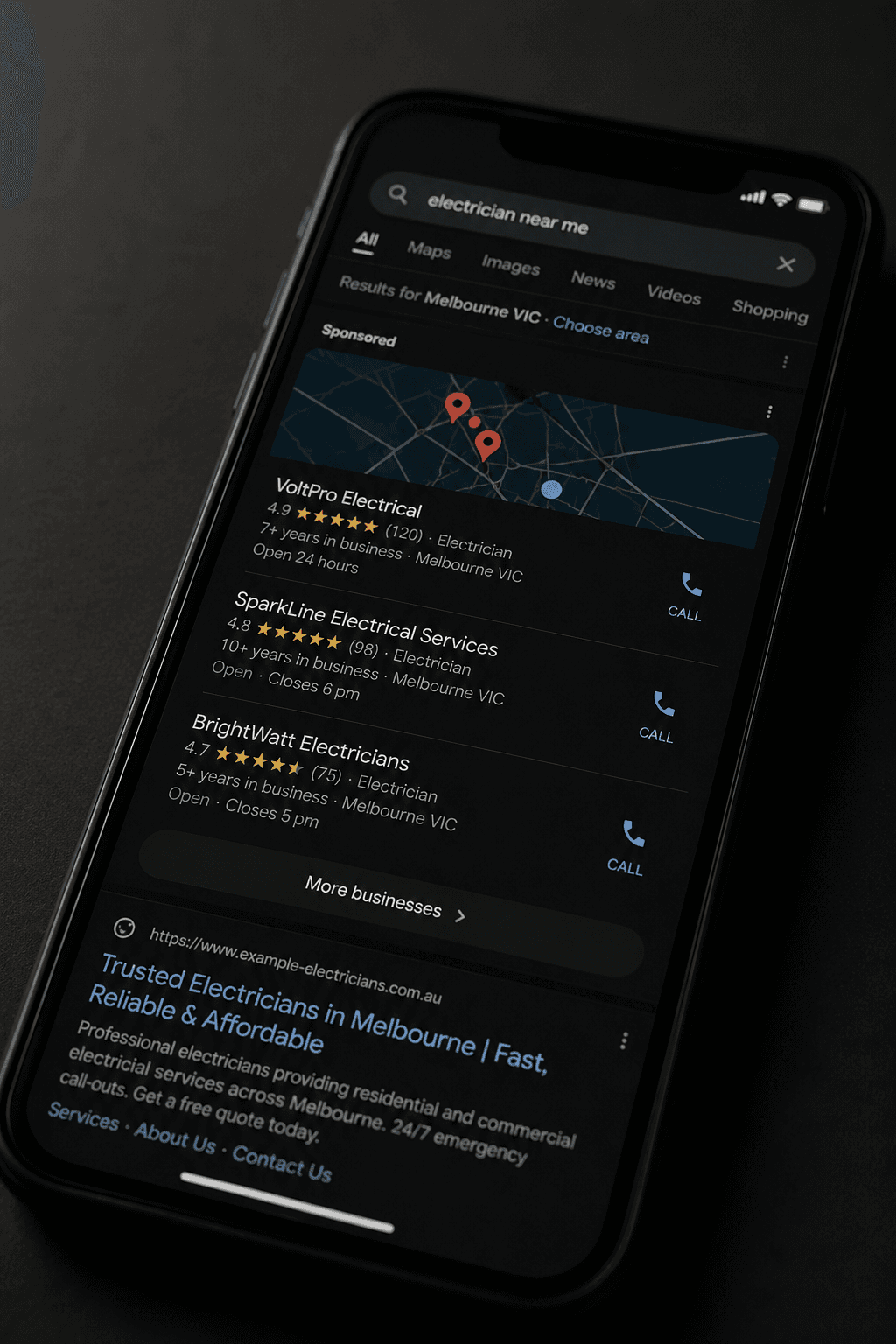
SEO
Local search visibility built into the structure of your site, not bolted on after. The right page titles, schema markup, and location signals so your business appears where customers are actually looking.
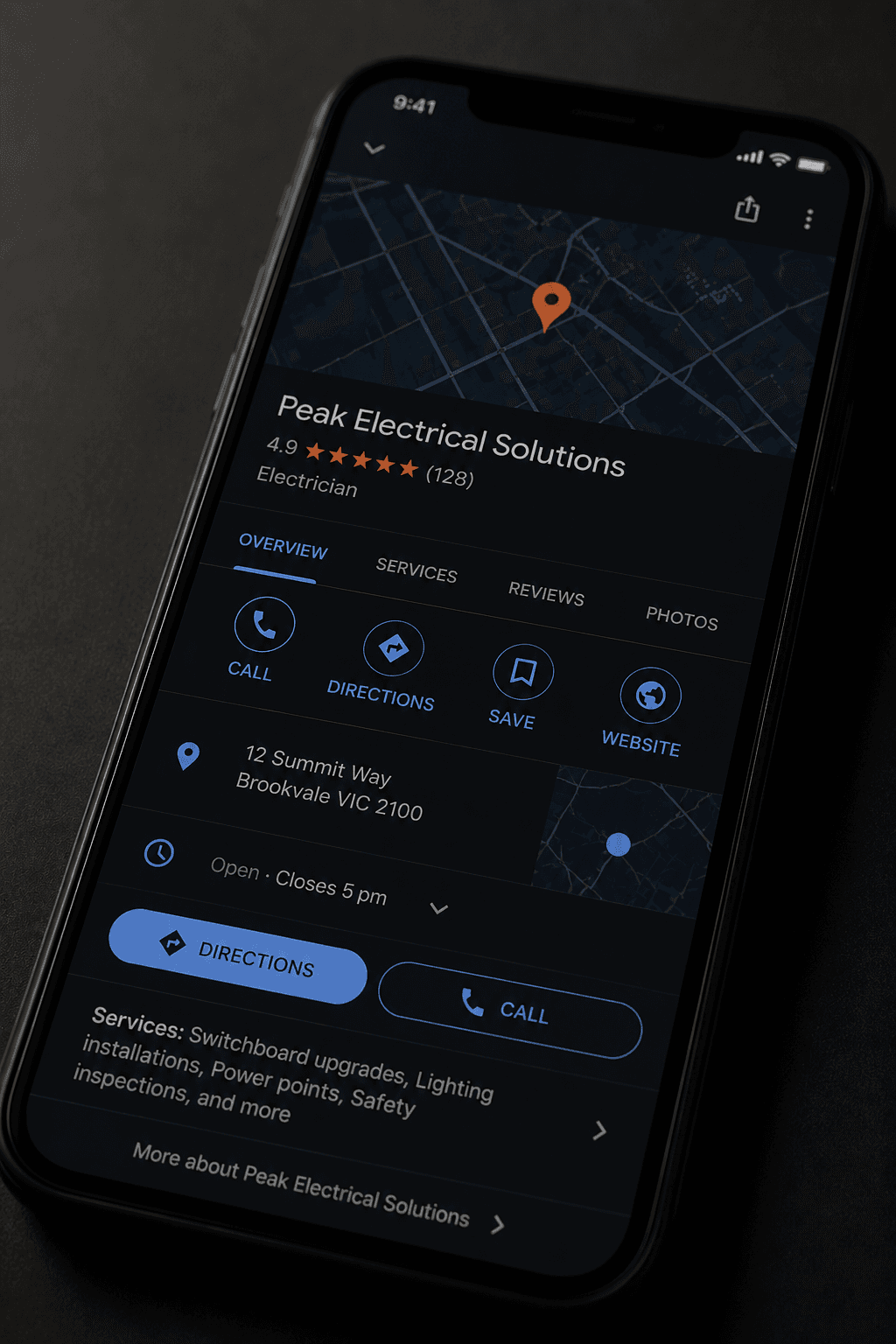
Google Business Profile
Your GBP listing is often the first thing a customer sees before your website. Set up correctly and kept current, it drives map pack appearances and direct enquiries from local searches.
Most underperforming websites do not fail because the business is poor. They fail because the structure is unclear, the services are too vague, and the site does not help people decide what to do next.

Why Roofing Websites Need More Structure Than Most Trades
Roofing Covers a Wider Range of Customer Needs Than Most Trades
Roofing is not a single service. A customer with a leaking flat roof in a commercial property, a homeowner who needs an emergency repair after storm damage, and a landlord looking for a full re-roof on a terraced house are all searching differently, with different urgency and different questions they need answered before contacting anyone. A website that treats all of those customers as a single audience, with one combined services page listing everything the business does, is not well positioned for any of them. Roofing businesses that consistently generate direct enquiries are almost always the ones whose websites reflect the range of work they do in a way that is useful to each type of customer.
The Emergency vs Planned Split That Most Roofing Sites Get Wrong
Roofing searches divide clearly into two categories: emergency and planned. Emergency searches, for a sudden leak, storm damage, or a problem that needs immediate attention, are urgent and fast. The customer searches, looks at the first two or three results, and calls whoever looks available and credible. Planned searches, for a full re-roof, a flat roof replacement, or a garage roof repair, involve more research. The customer will compare two or three businesses, look at what is offered, and assess whether the contractor handles their specific type of job. A website that does not address those two types of enquiry separately, with appropriate content for each, will consistently underperform for both.
Why Roofing Directories Cost More Than a Well-Built Website
Many roofing contractors rely heavily on paid directory listings for their enquiries, paying per lead or per month for a consistent flow of work. Those directories work, but they are expensive over time and the leads are shared with multiple competing businesses. A properly structured website that generates direct enquiries is a significantly more cost-effective long-term source of work, because the enquiries come exclusively to the business and the cost of generating them decreases over time as the site builds search authority. The investment in a well-built roofing website typically pays back within a few months of the site launching.
Local Relevance Is What Separates Roofing Websites That Rank From Those That Do Not
A roofing website that references one town on the homepage but has no other local content is not doing enough to appear consistently in local search results. Roofers typically cover a radius of 15 to 25 miles, and the website needs to reflect that coverage across multiple location pages or location-specific content within service pages. A roofer covering Maidstone, Tonbridge, Sevenoaks, and the surrounding villages needs the website to establish local relevance for each of those areas, not just mention them in a footer or a single paragraph on the homepage.
What a Roofing Website Should Actually Include
Separate Pages for Each Core Roofing Service
A roofing website should have individual pages for each main service type the business offers. Pitched roof repairs, flat roofing, re-roofing, chimney work, emergency callout, and guttering are each distinct services with their own search demand and their own customer intent. Building a dedicated page for each of those services, with content built around the specific customer searching for that job type, is what allows the website to appear in specific service searches rather than only for broad roofing terms dominated by directories.
Location Pages That Cover the Full Working Radius
Most roofing contractors cover a significant geographic area, and the website needs to reflect that. Building location-specific pages for the main towns within the working radius, each with content that establishes genuine local relevance, is what allows the site to generate enquiries from across the full area rather than only from the immediate local postcode. A roofer covering a 20-mile radius from their base has a search opportunity across dozens of towns and postcodes that a single-location website is consistently failing to capture.
Emergency Callout Content That Converts Fast Decisions
Emergency roofing searches are high-intent and fast-moving. A customer searching for an emergency roofer needs to find a page that confirms availability, establishes credibility quickly, and makes it immediately obvious how to make contact. A dedicated emergency callout page, structured to answer those specific needs and positioned prominently in the site navigation, will convert a higher proportion of those urgent searches than a combined services page that requires the customer to search for the relevant information.
Pricing and Timeline for a Roofing Website
A structured roofing website from MAI Solutions typically costs between £1,200 and £2,500 depending on the number of service pages, the locations to be covered, and whether ongoing support is included. The build takes three to five weeks from initial planning to launch. Hosting and ongoing maintenance are included in the service. Most roofing contractors see a meaningful improvement in direct enquiries within two to three months of the new site launching, with the improvement often accelerating as the site builds search authority over the following months.
Review Integration and Social Proof
Roofing is a trade where customers rely heavily on reviews and completed work photos before making contact. Building review integration into the site, with a clear process for requesting reviews after each job, and a regularly updated portfolio of completed work, is one of the most cost-effective ways to improve conversion rate over time. Those elements do not need to be complex, but their presence on the site consistently outperforms sites that rely on text alone to establish credibility.
Who This Is the Right Fit For
This service works best for roofing contractors who are established, want consistent direct enquiries rather than paying directory fees for every lead, and are looking for a website built to perform over the long term. It is not the right fit for a contractor who wants the cheapest possible option regardless of what the site produces, or one who is still undecided about which services or areas to focus on. A roofing website built without the right structure will not generate the enquiries that justify the investment.
A simple, structured process that keeps the project clear from the first plan through to launch and ongoing support.
Examples of businesses that needed a stronger online presence, clearer service presentation, and a website that felt more credible from the first visit.








Structured websites for service businesses that need clearer messaging, stronger page flow, and a better path from visit to enquiry. Built to support trust, usability, and long-term growth.
Local SEO foundations built into the website structure, including service targeting, location relevance, internal linking, and page hierarchy that helps search engines understand what you do and where you work.
Google Business Profile setup and optimisation focused on stronger local visibility, accurate business information, and a profile that supports calls, map discovery, and enquiry-driven traffic.
Managed website hosting with ongoing support, maintenance, monitoring, and updates to keep the site secure, reliable, and useful after launch.