Web design for electricians should reflect where the work now comes from. EV chargers, EICRs, and landlord certificates bring searches with real money behind them. Most electrician sites still read like a list of jobs from 2015.
Most underperforming websites do not fail because the business is poor. They fail because the structure is unclear, the services are too vague, and the site does not help people decide what to do next.


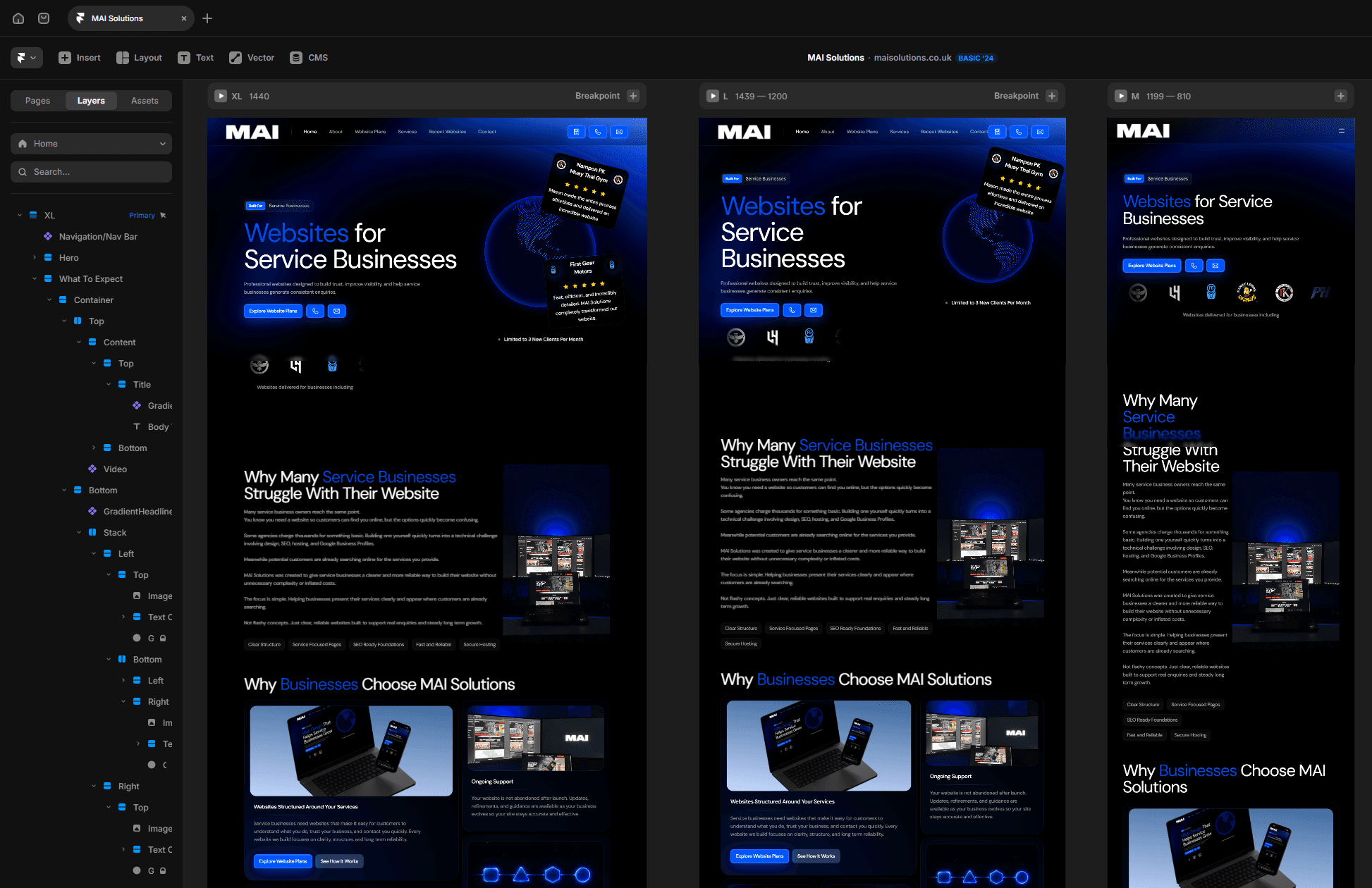
Web Design
A site built around how your customers search and decide, not just how it looks. Every page is structured to generate enquiries, with SEO foundations included from the start.
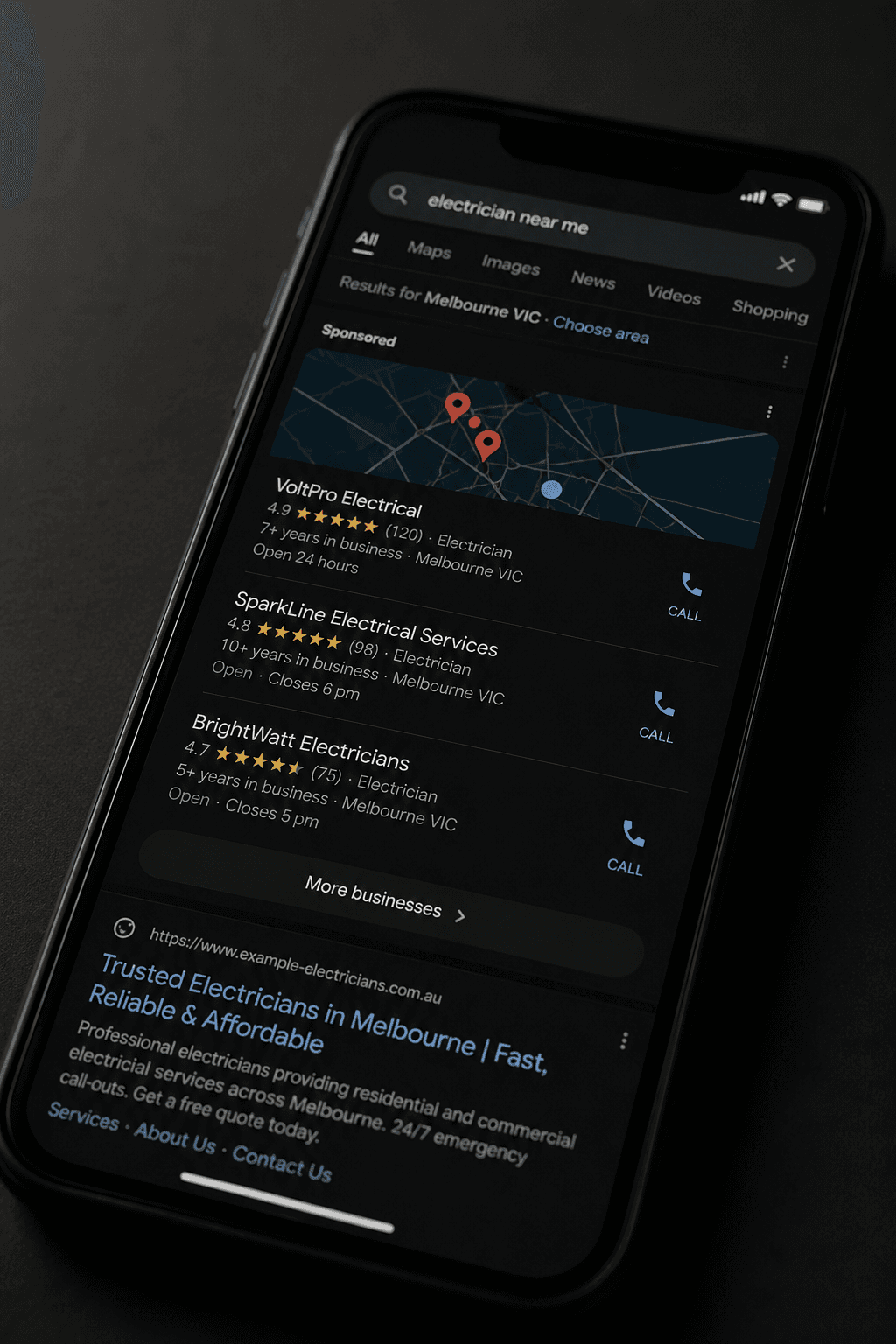
SEO
Local search visibility built into the structure of your site, not bolted on after. The right page titles, schema markup, and location signals so your business appears where customers are actually looking.
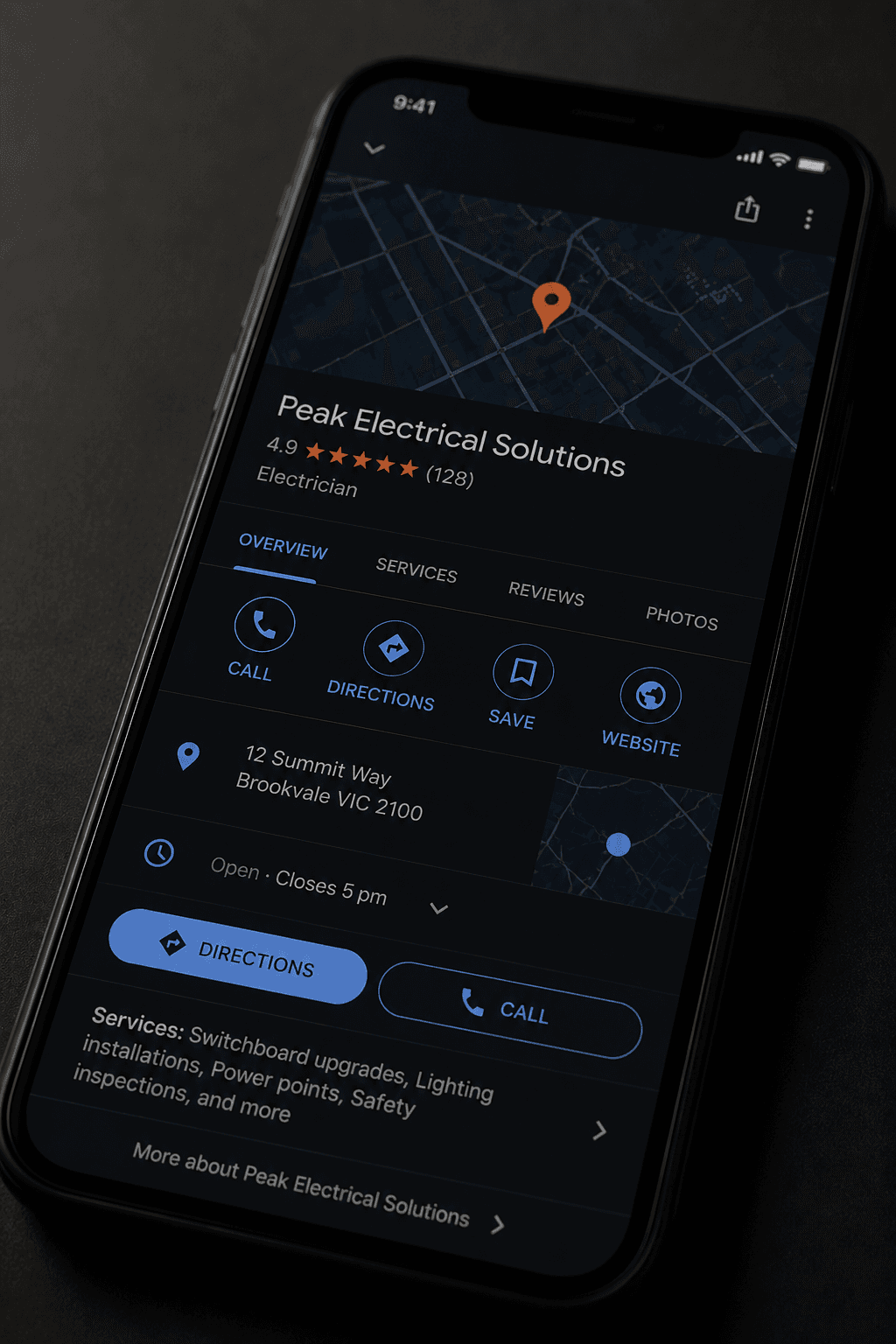
Google Business Profile
Your GBP listing is often the first thing a customer sees before your website. Set up correctly and kept current, it drives map pack appearances and direct enquiries from local searches.
Where Electrical Enquiries Actually Come From
EV Chargers and EICRs Are Where the Search Demand Grew
Ten years ago electrician searches meant rewires, fuse boards, and odd jobs. Now EV charger installs and EICR checks bring searches with real intent. A homeowner booking a charger install has the budget set and a deadline. A landlord needing an EICR has a legal duty and a renewal date. Electricians who name this work on their site win those searches. Generic service lists get skipped.
Electrician Web Design for Compliance-Led Customers
Landlords and letting agents buy differently from homeowners. They want certificates done fast, clear pricing, and an electrician who answers. One letting agent can mean dozens of EICRs a year. Electrician web design should give that reader their own page and a direct route in. Most sites lump landlord work under a vague services heading. That hides the most repeat work an electrician can get.
Registration Means Nothing If Nobody Can See It
Nearly every electrician is NICEIC or NAPIT registered. Almost none of them use it properly on their websites. Customers weighing up two electricians look for the logo, the number, and what it covers. Show it next to the enquiry button and the safety doubt is settled right there. The same goes for Part P and insurance cover. Trust markers belong where decisions happen, not buried on an about page.
Sole Traders Compete With Nationals for the Same Searches
Search results for electrical work mix sole traders with national chains and directories. The big names win on brand, so a local electrician wins on being local. That means naming the towns covered, the work done, and real local jobs. A Maidstone electrician with a proper site beats a national page for Maidstone searches. Google backs the truly local result when the site proves it. Most one-page electrician sites never give it the chance.
An Electrician Website Built Around the Work That Pays
Separate Pages for Chargers, EICRs, Rewires, and Boards
Each service with search demand gets its own page. EV charger installation, EICRs, rewires, fuse board upgrades, and emergency call-outs all qualify. A customer searching for one of those lands on a page about exactly that. Mixed service lists rank for nothing and convert worse. The structure also lets you push toward the work you prefer. Want more charger installs? Build the page that targets them.
Electrician Website Design That Wins Local Searches
The certification is national but the work is local. Service area pages cover the towns you actually work, each written properly. LocalBusiness and Service schema tell Google what you do and where. Titles and descriptions target searches a local electrician can realistically win. These foundations go in during the build, not bolted on later. Electrician website design without them leaves rankings to luck.
Proof That Settles the Safety Question
Electrical work is invisible once the plasterer has been. Customers rely on reviews, photos of tidy boards, and registration to judge quality. A photo of a neat consumer unit says more than any paragraph. We place reviews and credentials beside every enquiry point. Named local jobs carry extra weight with nearby customers. Customers who see that proof at the right moment pick up the phone.
Pricing, Timeline, and What's Included
An electrician site usually needs 6 to 10 pages, priced at £525. The £45 a month covers hosting, management, and changes when you need them. Builds take two to three weeks from agreed content to launch. Local SEO foundations and Google Business Profile alignment come as standard. The price is agreed before work starts. Nothing gets added to the invoice later.
Enquiry Routes for Domestic and Landlord Work
Homeowners mostly ring or fill in a short form. Landlords and agents often email because they need a paper trail. The site handles both without forcing either down the wrong route. Phone stays visible throughout, forms stay short, and email sits ready for agents. Every route gets tracked. You see exactly where each enquiry came from.
Is This the Right Fit?
This suits electricians and contractors who want direct domestic and landlord enquiries. It is not right for firms working purely on new-build contracts through main contractors. Their work comes from relationships, not search. It is also the wrong fit if you want a site built once and never touched. Electricians chasing charger installs, EICR volume, and steady local work get the most value. If that matches your book, it fits.
A simple, structured process that keeps the project clear from the first plan through to launch and ongoing support.
Examples of businesses that needed a stronger online presence, clearer service presentation, and a website that felt more credible from the first visit.









Structured websites for service businesses that need clearer messaging, stronger page flow, and a better path from visit to enquiry. Built to support trust, usability, and long-term growth.
Local SEO foundations built into the website structure, including service targeting, location relevance, internal linking, and page hierarchy that helps search engines understand what you do and where you work.
Google Business Profile setup and optimisation focused on stronger local visibility, accurate business information, and a profile that supports calls, map discovery, and enquiry-driven traffic.
Managed website hosting with ongoing support, maintenance, monitoring, and updates to keep the site secure, reliable, and useful after launch.